
Bedrucktes Pergamentpapier für Takeaway-Betriebe in UK: Kosten, Mindestbestellmengen und Prüfpunkte vor der Bestellung
Custom printed greaseproof paper costs 3p–8p per sheet for UK takeaways. Compare supplier MOQs, plate fees, paper weights, and ISEGA certification requirements.
Filed under Buying Guides.
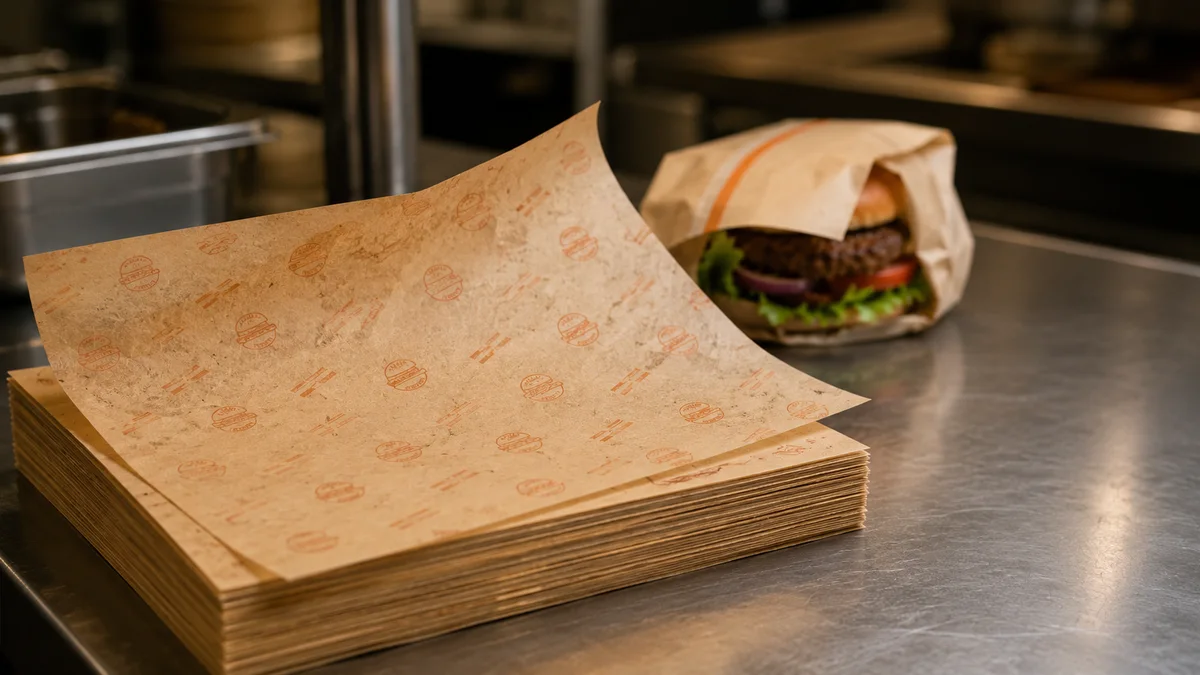
Bedrucktes Pergamentpapier für Takeaway-Betriebe in UK: Kosten, Mindestbestellmengen und Prüfpunkte vor der Bestellung
Bedrucktes Pergamentpapier für Takeaway-Betriebe in UK kostet zwischen 3 Pence und 8 Pence pro Blatt bei typischen Bestellmengen von 2.000 bis 5.000 Blatt, zuzüglich einmaliger Druckplattengebühren von 40 £ bis 120 £ pro Farbe. Die Gesamtinvestition für eine Erstbestellung – einschließlich Platten, Drucklauf und Lieferung – liegt für die meisten unabhängigen Betreiber zwischen 160 £ und 500 £. Für diesen Preis erhalten Sie Burger-Wraps, Körbcheneinlagen oder Pommes-Tüten mit Ihrem Logo, und die Markenwirkung reicht weit über das hinaus, was die Kosten pro Blatt vermuten lassen.
Einen Takeaway in Großbritannien zu betreiben bedeutet heute, um jede Bestellung zu kämpfen. Lieferplattformen verlangen 25 bis 35 Prozent Provision. Die Fußgängerzonen sind leerer als noch vor fünf Jahren. Und wenn ein Kunde auf seinem Handy durch fünfzig nahezu identische Kebabläden und Burgerlokale scrollt, bleiben diejenigen in Erinnerung, die anders aussahen. Bedrucktes Pergamentpapier ist eine der günstigsten Möglichkeiten, diesen Unterschied zu schaffen. Aber der Bestellprozess ist voller Fallstricke – Mindestbestellmengen, die Ihr Geld verschwenden, Drucke, die bei Kontakt mit heißem Öl versagen, Lieferanten, die nach Zahlung der Rechnung verschwinden. Dieser Leitfaden führt durch die tatsächlichen Kosten, die von britischen Lieferanten tatsächlich durchgesetzten Mindestbestellmengen, die technischen Spezifikationen, die für den Lebensmittelkontakt wichtig sind, und die Fragen, die die meisten Betreiber erst stellen, wenn die Kartons angekommen sind.
Wichtige Erkenntnisse • Maßgeblich bedrucktes Pergamentpapier kostet 3 Pence–8 Pence pro Blatt bei Mengen von 2.000–5.000, mit einmaligen Platteneinrichtungsgebühren von 40 £–120 £ pro Farbe. • Die meisten britischen Lieferanten geben Mindestbestellmengen von 500–1.000 Blatt an, aber der Preis pro Blatt wird erst ab 2.000+ wettbewerbsfähig. • 1-farbiger Druck auf weißem Papier bietet das beste Kosten-Marken-Verhältnis – Vollfarbe erhöht den Preis pro Blatt um 40–60 %. • Pergamentpapier mit Lebensmittelkontakt muss FSA-zugelassen sein mit ISEGA-zertifizierten Farben; fordern Sie das Zertifikat an, bevor Sie eine Anzahlung leisten. • Ein maßgeschneiderter Burger-Wrap kostet etwa 2 Pence mehr als ein einfacher – und allein die Social-Media-Präsenz kann sich zehnfach auszahlen, wenn nur ein Kundenbeitrag viral geht.
Was bedrucktes Pergamentpapier eigentlich ist
Pergamentpapier ist ein dichtes, ölbeständiges Blatt, das zum Einwickeln von Burgern, zum Auslegen von Takeaway-Körbchen, zum Halten von Pommes in einer Tüte oder zum Trennen von Schichten von Gebäck in einer Schachtel verwendet wird. Im Gegensatz zu normalem Seidenpapier wird es kalandriert – unter hohem Druck zwischen beheizten Walzen gepresst – um die Faserstruktur zu schließen, sodass Fette und Öle an der Oberfläche bleiben und nicht durchsickern.
Bedrucktes Pergamentpapier nimmt dasselbe Material und druckt Ihr Logo, Muster oder Ihre Botschaft mit lebensmittelechten Farben darauf. Der Druck befindet sich auf der Außenseite, weg vom Essen. Wenn ein Kunde einen Burger auswickelt, der in Papier mit Ihrem Logo eingewickelt ist, sieht er Ihre Marke, bevor er das Essen sieht. Macht er ein Foto – und das tut er, denn Food-Shots sind die am häufigsten geteilte Kategorie auf Instagram – reist Ihre Marke mit.
Das Produkt trägt in Lieferantenkatalogen mehrere Namen: maßgeblich bedrucktes Pergamentpapier, bedruckte Lebensmittelverpackungsblätter, bedrucktes Delikatessenpapier, maßgeschneiderter Burger-Wrap oder einfach Logo-Pergament. Sie alle bezeichnen dasselbe: lebensmittelechtes Papier, bedruckt mit Ihrem Design, zugeschnitten auf Ihr Blattformat.
Wo britische Takeaways es am häufigsten einsetzen
Burger- und Sandwich-Wraps sind die häufigste Anwendung. Ein Blatt von 350 mm x 420 mm umwickelt einen Standard-Viertelpünder mit genügend Platz zum Falten an beiden Enden. Das Papier berührt warme Patties, geschmolzenen Käse und Fett – der Druck muss diesen Kontakt überstehen, ohne zu verschmieren, zu verblassen oder Farbe auf das Essen zu übertragen. Wenn Sie bereits Burger-Boxen kaufen, gibt der Wechsel zu bedrucktem Wrap als Inneneinlage zwei Markenberührungspunkte – die Box außen, der Wrap innen – ohne Ihre Verpackungskosten zu verdoppeln.
Körbcheneinlagen sind der zweite große Anwendungsfall. Brathähnchenläden, Fish-and-Chips-Imbisse und Spezialisten für Loaded Fries verwenden bedruckte Blätter, um Drahtkörbchen oder Kunststofftabletts auszulegen. Das Blatt fängt Tropfen und Krümel auf, und die Markierung verwandelt das Körbchen in eine Werbetafel, die während der gesamten Mahlzeit auf dem Tisch des Kunden steht.
Pommes-Tüten und Frittenschaufeln verwenden kleinere Blätter – typischerweise 250 mm x 300 mm – bedruckt mit einem sich wiederholenden Logomuster. Ein belebter Imbiss verbraucht an einem Freitagabend 300 bis 500 Tüten. Bei 4 Pence pro bedruckter Tüte gegenüber 1,5 Pence für eine einfache Tüte bringen die zusätzlichen 7,50 £ bis 12,50 £ dieser Schicht Ihre Marke vor jeden Kunden, der mit Pommes in der Hand hinausgeht.
Gebäckverpackungen, Kuchenformeinlagen und Delikatessenpapier für Bäckereien verwenden leichtere Gewichte – 28–32 GSM – und tragen typischerweise einen feineren Druck, oft einfarbig auf Kraft oder Weiß. Die Optik ist hier wichtiger, da Backwaren sich gut fotografieren lassen, und eine bedruckte Verpackung unter einem Croissant oder Zimtschnecke verwandelt ein generisches Backprodukt in ein erkennbares Produkt.
Wie viel maßgeblich bedrucktes Pergamentpapier in Großbritannien kostet
Diese Zahlen basieren auf Angeboten von vier britischen Lieferanten – It's a Wrap (Chevler), The Product Boxes UK, Packaging Lab und BrandIt Pack – aus Mai 2026 für ein Standardblatt von 350 mm x 420 mm in weißem Pergamentpapier 38 GSM.
Einfarbiger Druck, 1.000 Blatt: 7,5 Pence–10 Pence pro Blatt zuzüglich einer Plattengebühr von 50 £–70 £. Gesamtkosten der Erstbestellung inklusive Lieferung: etwa 135 £–180 £. Das ist der Einstiegspunkt für einen kleinen Takeaway, der bedruckte Wraps zum ersten Mal testet.
Einfarbiger Druck, 5.000 Blatt: 3,5 Pence–5 Pence pro Blatt. Die Plattengebühren sind die gleichen einmaligen, daher sinkt der Preis pro Blatt stark. Gesamtkosten Erstbestellung: 230 £–350 £. Das ist die Menge, bei der bedrucktes Pergamentpapier für einen typischen unabhängigen Takeaway mit 100–150 Bestellungen pro Tag finanziell sinnvoll wird. Bei dieser Menge reicht eine Bestellung von 5.000 Blatt etwa sechs bis acht Wochen.
Vollfarbiger CMYK-Druck, 5.000 Blatt: 6 Pence–10 Pence pro Blatt mit Plattengebühren von 80 £–150 £ pro Farbe. Für CMYK werden vier Platten benötigt, daher liegen die Einrichtungskosten bei 320 £–600 £. Gesamtkosten Erstbestellung: 600 £–1.100 £. Vollfarbe ist für etablierte Unternehmen gedacht, die ihr Design und ihre Mengen validiert haben.
Digitaldruck, 500 Blatt: 8 Pence–14 Pence pro Blatt ohne Plattengebühren. Lieferanten wie Packaging Lab bieten kurze Digitaldruckauflagen für kleine Cafés und Markthändler an. Die Stückkosten sind höher, aber Sie vermeiden die Einrichtungsgebühr. Gesamtkosten Erstbestellung: 40 £–80 £. Das ist die niedrigste Einstiegshürde – ideal zum Testen eines Designs, bevor Sie sich für eine größere Flexodruckauflage entscheiden.
Die versteckten Kosten, die niemand erwähnt, sind die Lagerung. Fünftausend Blatt 350 mm x 420 mm in einem Karton nehmen ungefähr die gleiche Stellfläche ein wie zwei Kartons mit Takeaway-Behältern. Wenn Ihre Küche oder Ihr Lager knapp ist – und die meisten britischen Takeaway-Küchen sind es – berücksichtigen Sie das, bevor Sie eine Palette bestellen.
Mindestbestellmengen, die britische Lieferanten tatsächlich durchsetzen
Die Mindestbestellmengen der Lieferanten variieren stark, und die auf einer Website veröffentlichte Zahl ist oft verhandelbar – besonders wenn Sie anrufen, statt über ein Webformular zu bestellen.
It's a Wrap wirbt mit 500 Blatt als Minimum. Das ist tatsächlich verfügbar, und sie führen eine Bestellung über 500 Blatt zum angegebenen Preis aus. Dies ist die niedrigste Mindestbestellmenge eines dedizierten Lebensmittelverpackungsdruckers in Großbritannien.
The Product Boxes UK beginnt bei 1.000 Blatt für individuellen Druck. Ihre Standard-Pergamentblätter können in Paketen zu 100 Stück gekauft werden, aber für bedruckte Auflagen ist 1.000 fest.
Packaging Lab bietet digitale Kurzläufe ab 250 Blatt an – die niedrigste Mindestbestellmenge auf dem Markt – jedoch nur im einfarbigen Druck auf Standardformaten.
BioPak verlangt 100.000 Einheiten pro Format für individuellen Druck. Ihr Geschäftsmodell ist die Großmengenbelieferung mit Standardware; individueller Druck ist eine Gefälligkeit, nicht ihr Kerngeschäft. Wenn Sie ein einzelner Takeaway sind, überspringen Sie BioPak für bedruckte Arbeiten.
Der praktische Sweet Spot für die meisten Unabhängigen liegt bei 2.000 Blatt. Bei dieser Menge haben Sie genug Vorrat für sechs bis acht Wochen Betrieb, ohne zu viel Bargeld oder Lagerfläche zu binden. Ein burgerlastiger Takeaway mit 120 Gedecken pro Tag verbraucht vielleicht 80 bis 100 Wraps täglich, also reichen 2.000 Blatt etwa einen Monat. Angesichts der Wiederbeschaffungszeit von 10 bis 15 Werktagen sollten Sie Ihre nächste Bestellung aufgeben, wenn Sie noch etwa 500 Blatt übrig haben.
Was Sie brauchen, bevor ein Drucker Ihre Bestellung annimmt
Drucker benötigen Vektordateien zur Herstellung von Druckplatten. Das bedeutet eine Datei in Adobe Illustrator (.ai), EPS oder Vektor-PDF – kein JPEG, PNG oder Canva-Export. Wenn Sie ein Rasterbild senden, wird der Drucker es entweder ablehnen oder Ihnen eine Umwandlungsgebühr von 45 £–95 £ berechnen, um es neu zu zeichnen.
Die Datei muss angeben: Blattabmessungen in Millimetern, Druckbereich mit einem Rand von 5–10 mm vom Blattrand, die Anzahl der Farben – 1, 2 oder volles CMYK – und Pantone-Referenzen, wenn Sie eine exakte Markenfarbübereinstimmung benötigen. Wenn Ihr Logo rot ist und der Drucker ein Standard-Warmrot statt Ihres spezifischen Pantone 186 C verwendet, sieht das Ergebnis nicht markenkonform aus, und Sie erhalten keine Rückerstattung für einen technisch korrekten Druckauftrag.
Die meisten Lieferanten erstellen vor der Fertigung einen Digitalproof. Prüfen Sie ihn sorgfältig. Achten Sie auf die Platzierung des Logos relativ zu den Blatträndern. Bestätigen Sie, dass die Blattabmessungen zu Ihrem Wickelablauf passen – ein Blatt, das 20 mm zu schmal ist, bedeutet, dass Ihr Team während eines Freitagsansturms Schwierigkeiten haben wird, Burger sauber zu wickeln, und das Papier wird beschuldigt, nicht die Spezifikation.
Bei 1-farbigen Drucken fragen Sie, ob die Platte aus Ihrer Datei erstellt wird oder ob der Drucker Farben aus einer vollfarbigen Vorlage trennen muss. Farbseparation für den Flexodruck ist eine Fertigkeit; wenn Sie ein CMYK-Logo für einen 1-farbigen Job liefern, muss jemand entscheiden, wie es mit einer einzigen Farbe dargestellt wird. Ein guter Drucker sendet Ihnen einen Separationsproof, der genau zeigt, wie die monochrome Version aussehen wird.
Lebensmittelsicherheitsvorschriften für bedrucktes Pergamentpapier in Großbritannien
Jedes Papier, das in Großbritannien mit Lebensmitteln in Berührung kommt, muss der Verordnung (EG) Nr. 1935/2004 über Materialien und Gegenstände, die dazu bestimmt sind, mit Lebensmitteln in Berührung zu kommen, entsprechen, die nach dem Brexit als beibehaltenes EU-Recht in Kraft bleibt. In der Praxis bedeutet dies, dass das Papier und die Farben keine Stoffe in Mengen an die Lebensmittel abgeben dürfen, die die menschliche Gesundheit gefährden oder die Zusammensetzung, den Geschmack oder den Geruch der Lebensmittel verändern könnten.
Der Industriestandard für Lebensmittelkontaktpapier in Großbritannien ist die ISEGA-Zertifizierung. ISEGA ist ein deutsches Prüfinstitut, dessen Zertifikat von den britischen Durchsetzungsbehörden anerkannt wird. Jeder seriöse britische Lieferant von bedrucktem Pergamentpapier besitzt ein ISEGA-Zertifikat, das sowohl das Basispapier als auch die Druckfarben abdeckt. Fordern Sie eine Kopie des Zertifikats an, bevor Sie eine Anzahlung leisten. Zögert der Lieferant oder bietet stattdessen eine Selbstkonformitätserklärung an, suchen Sie einen anderen Lieferanten.
Die FSC-Zertifizierung ist für den Papierbestand wichtig. Das Siegel der Rückverfolgbarkeitskette des Forest Stewardship Council bestätigt, dass die Papierfaser aus verantwortungsvoll bewirtschafteten Wäldern stammt. Die meisten Betreiber denken nicht daran zu fragen, aber wenn Sie ökologische oder nachhaltige Behauptungen auf Ihr Papier drucken – und viele Takeaways tun das – benötigen Sie FSC-zertifizierten Bestand, um diese Behauptung gemäß dem UK Green Claims Code der Wettbewerbs- und Marktaufsichtsbehörde zu untermauern.
Die Farben müssen migrationsarm sein, was bedeutet, dass die chemischen Bestandteile auch unter warmen, fettigen Bedingungen nicht durch das Papier in die Lebensmittel migrieren. Wasserbasierte und sojabasierte Farben sind in der britischen Lebensmittelverpackungsdruckindustrie Standard. UV-gehärtete Farben sind für den Lebensmittelkontakt weniger verbreitet, da der Aushärtungsprozess photoinitiierende Rückstände hinterlassen kann; wenn ein Lieferant UV-Druck auf Pergamentpapier anbietet, fragen Sie, ob die Farben speziell für migrationsarmen Lebensmittelkontakt formuliert sind.
Was mit dem Druck passiert, wenn er auf heiße Lebensmittel trifft
Dies ist der Test, der gutes bedrucktes Pergamentpapier von Altpapier trennt. Ein Burger kommt mit etwa 70 °C vom Grill. Das Einwickelpapier drückt gegen heißes Fett, Dampf und geschmolzenen Käse. Innerhalb von dreißig Sekunden ist das Papier warm, an Stellen durchscheinend und arbeitet hart daran, alles zusammenzuhalten.
Ein richtig bedrucktes Pergamentblatt übersteht dies, ohne dass die Farbe auf die Hände des Kunden verschmiert oder auf das Brötchen übergeht. Der Kalandrierprozess, der das Papier fettdicht macht, hilft ebenfalls – die geschlossene Faseroberfläche hält den Farbfilm oben, anstatt ihn einsinken und durchbluten zu lassen. Aber das Papiergewicht macht einen Unterschied. Bei 28–32 GSM ist das Blatt dünn genug, dass schwere Farbdeckung auf der Rückseite durchscheinen kann. Bei 38–42 GSM bietet die zusätzliche Dicke der Farbe ein besseres Substrat und der Wickel fühlt sich in der Hand des Kunden substanzieller an.
Wenn Sie heiße, fettige Speisen einwickeln – Brathähnchen, Halloumi-Pommes, baconlastige Burger – geben Sie mindestens 38 GSM an. Für Gebäck, Kuchenstücke oder trockene Sandwiches ist 28–32 GSM ausreichend und spart etwa 15 bis 20 Prozent der Kosten pro Blatt.
Ein Muster, das immer wieder aus dem Betreiberfeedback auftaucht: dunkle, einfarbige Drucke zeigen Fettflecken sichtbarer als helle oder gemusterte Drucke. Ein Burger-Wrap mit schwarzem Hintergrund absorbiert Wärme schneller und zeigt jeden Ölfingerabdruck. Ein weißer oder Kraft-Hintergrund mit sich wiederholendem Logomuster verbirgt die unvermeidlichen Fettflecken und sieht auch nach zehn Minuten in einer Liefertüte noch ansprechend aus.
Ist bedrucktes Pergamentpapier das Geld wert?
Raza betreibt einen Smash-Burger-Takeaway in Birmingham. Er macht an einem Freitag und Samstag etwa 140 Bestellungen, etwa die Hälfte davon Lieferungen. Er wechselte im März 2026 von einfachen weißen 38-GSM-Blättern zu 1-farbigen bedruckten Wraps. Die bedruckten Blätter kosten ihn 4,2 Pence pro Stück bei 5.000 Stück, gegenüber 1,8 Pence für einfache. Das sind zusätzliche 12 £ pro Woche für Papier.
Innerhalb des ersten Monats posteten drei Kunden Fotos ihrer eingewickelten Burger auf Instagram Stories und taggten den Takeaway. Einer dieser Beiträge wurde von einem Food-Blogger aus Birmingham mit 18.000 Followern geteilt. Raza schätzt, dass dieser einzelne Repost in der folgenden Woche 20 bis 30 neue Bestellungen brachte – bei einem durchschnittlichen Bestellwert von 14,50 £ entspricht das etwa 350 £ an zurechenbaren Einnahmen, aus einer Markeninvestition, die ihn 50 £ pro Monat kostet.
Nicht jeder Takeaway wird diese Art von direktem Return sehen. Aber die Rechnung ist verzeihend: Wenn bedrucktes Papier 2 bis 3 Pence pro Bestellung hinzufügt und Ihr durchschnittlicher Bestellwert über 10 £ liegt, benötigen Sie eine zusätzliche Bestellung pro fünfhundert, um die Gewinnschwelle zu erreichen. In einem wettbewerbsintensiven Lieferradius ist die Markenbildung, die jemanden dazu bringt, Ihren Burgerladen dem drei Straßen entfernten vorzuziehen, weit mehr wert als die Kosten des Papiers.
Es gibt auch weiche Vorteile. Die Mitarbeiter sind stolzer, wenn sie ein verpacktes Produkt mit Logo übergeben. Kunden nehmen bedruckte Verpackungen als Zeichen von Professionalität wahr – wenn Sie in Papier investiert haben, so der Gedanke, haben Sie wahrscheinlich auch in Zutaten und Hygiene investiert. Lieferfahrer, die jede Schicht Dutzende von einfachen braunen Tüten sehen, erinnern sich an die bedruckte. Sie erwähnen sie gegenüber Kunden. Diese Mundpropaganda ist kostenlos.
Wann einfaches Papier immer noch sinnvoller ist
Es gibt Zeiten, in denen bedrucktes Pergamentpapier nicht die richtige Wahl ist. Wenn Ihr durchschnittlicher Bestellwert unter 6 £ liegt und Ihre Marge knapp ist, frisst der zusätzliche Penny pro Blatt den Gewinn schneller auf, als die Markenbildung zurückzahlt. Wenn Sie häufig Ihr Menü, Logo oder Ihren Ladenname ändern – manche Betreiber gestalten alle achtzehn Monate um – bindet Sie die Bestellung von 5.000 bedruckten Blättern an ein Design, das Sie bereuen könnten. Wenn Ihr Küchenablauf kein bestimmtes Blattformat zulässt oder Ihr Team inkonsistent einwickelt, lösen Sie zuerst die operativen Grundlagen, bevor Sie Druckkomplexität hinzufügen.
Einfaches Papier ist auch richtig für hochvolumige Aktionszeiträume, in denen Sie kostenlose Proben abgeben oder Lockvogelangebote machen. Der Markenwert der Verpackung wird verwässert, wenn das Essen kostenlos ist.
Aber für die meisten etablierten britischen Takeaways mit 80 oder mehr Bestellungen pro Tag ist bedrucktes Pergamentpapier eine der kostengünstigsten und sichtbarsten Marketingentscheidungen. Es kostet weniger als ein gesponserter Instagram-Post, hält länger als ein Flyer und erreicht jeden einzelnen Kunden, der Ihr Essen öffnet.
FAQ
Wie viel kostet bedrucktes Pergamentpapier pro Blatt? Zwischen 3 Pence und 10 Pence pro Blatt, abhängig von Menge, Druckfarben und Blattformat. Einfarbiger Druck auf weißem 38 GSM bei 5.000 Blatt kostet etwa 3,5–5 Pence pro Blatt von britischen Lieferanten. Vollfarbiger CMYK-Druck in derselben Menge kostet 6–10 Pence pro Blatt. Druckplatteneinrichtungsgebühren von 40 £–150 £ pro Farbe sind einmalige Kosten, die Ihrer Erstbestellung hinzugefügt werden.
Wie hoch ist die Mindestbestellmenge für maßgeblich bedrucktes Pergamentpapier in UK? Die niedrigste veröffentlichte Mindestbestellmenge beträgt 250 Blatt bei Packaging Lab für digitale Kurzläufe. It's a Wrap beginnt bei 500 Blatt. Die meisten Lieferanten verlangen 1.000 Blatt für Flexodruck auf Plattenbasis. BioPak verlangt 100.000 Einheiten für individuelle Arbeiten. Die praktische Untergrenze für kosteneffiziente Preise pro Blatt liegt bei 2.000 Blatt.
Ist bedrucktes Pergamentpapier lebensmittelecht? Ja, vorausgesetzt, der Lieferant verwendet ISEGA-zertifiziertes Basispapier und migrationsarme Farben. Alle seriösen britischen Lieferanten stellen auf Anfrage ein ISEGA-Zertifikat aus. Das Papier muss der Verordnung (EG) 1935/2004 für Lebensmittelkontaktmaterialien entsprechen. Wasserbasierte und sojabasierte Farben sind der Standard für lebensmittelechten Druck auf dem britischen Markt.
Welches Papiergewicht sollte ich zum Einwickeln heißer Burger wählen? Mindestens 38 GSM für heiße, fettige Speisen. Bei 28–32 GSM ist das Blatt zu dünn für schwere Farbdeckung und zeigt Fettdurchschlag schneller. Für Gebäck, Kuchenstücke oder trockene Sandwiches reicht 28–32 GSM aus und kostet 15–20 % weniger. 42 GSM ist für schwerere Artikel erhältlich, wird aber für Standard-Takeaway-Verpackungen selten benötigt.
Wie lange dauert eine Bestellung von bedrucktem Pergamentpapier? Die Standardvorlaufzeit beträgt 10 bis 15 Werktage von der Proof-Freigabe bis zur Lieferung. Digitale Kurzläufe können in 5 bis 7 Werktagen versandt werden. Bestätigen Sie immer die Lieferzeiten vor der Zahlung – einige Lieferanten rechnen ab der Dateifreigabe, nicht ab der Bestellung, und die Proof-Phase kann 2 bis 3 Werktage hinzufügen.
Kann ich Vollfarbfotos auf Pergamentpapier drucken? Ja, mit CMYK-Flexodruck oder Digitaldruck. Allerdings verursacht Vollfarbe erhebliche Mehrkosten – vier Platten zu je 80 £–150 £ plus höhere Preise pro Blatt. Für die meisten unabhängigen Takeaways bietet 1- oder 2-farbiger Druck einen besseren Markenwert. Vollfarbe ist für Premiumprodukte, Geschenkverpackungen oder stark sichtbare Artikel gerechtfertigt, bei denen fotografische Qualität wichtig ist.
Nächste Schritte
Bedrucktes Pergamentpapier ist eine kleine Ausgabenposition mit überproportionaler Wirkung auf die Wahrnehmung Ihres Takeaways durch die Kunden. Beginnen Sie damit, zu messen, wie viele Blätter Sie tatsächlich in einer Woche verbrauchen – zählen Sie Burger-Wraps, Körbcheneinlagen und Tüten getrennt. Diese Zahl bestimmt Ihre Nachbestellmenge und sagt Ihnen, ob 500, 2.000 oder 5.000 Blatt die richtige Bestellgröße ist.
Besorgen Sie sich Ihr Logo im Vektorformat. Wenn Sie keins haben, bieten die meisten britischen Verpackungslieferanten grundlegende Grafikdienste im Platteneinrichtungspreis an, aber rechnen Sie mit 45 £–95 £ für die Neuerstellung des Logos, wenn Sie nur ein JPEG haben. Entscheiden Sie sich vor der Angebotseinholung für eine oder zwei Farben – der Wechsel von 1 zu 2 Farben während des Prozesses bedeutet in der Regel eine neue Platte und Mehrkosten.
Fordern Sie Muster früherer Arbeiten des Lieferanten an, idealerweise auf dem gleichen Papiergewicht und Blattformat, das Sie bestellen. Ein Proof auf 28-GSM-Büropapier sagt Ihnen nichts darüber, wie Ihr Logo auf 38-GSM-Pergamentpapier aussehen wird. Wenn er kein physisches Muster auf dem tatsächlichen Bestand senden kann, seien Sie vorsichtig.
Fragen Sie vor der Zahlung nach dem ISEGA-Zertifikat. Ein Lieferant, der kein Lebensmittelsicherheitszertifikat für sein bedrucktes Lebensmittelverpackungsprodukt vorlegen kann, ist kein Lieferant, den Sie zwischen Ihrem Essen und Ihren Kunden haben möchten.
Wenn Sie bereit sind, bedruckte Pergamentpapieroptionen für Ihren Takeaway zu vergleichen, fordern Sie ein Angebot von unserem Team an. Wir liefern bedruckte Pergamentblätter in Mengen von 500 bis 50.000, in 1-, 2- oder Vollfarbdruck, auf FSC-zertifiziertem 38-GSM-Bestand mit ISEGA-zugelassenen Farben. Holen Sie sich ein individuelles Angebot für Ihren Takeaway.