
Klare Plastikbecher für kalte Getränke im Vereinigten Königreich: Worauf Sie vor der Bestellung achten sollten
PET, rPET, or PLA? Here's how to choose clear cups that keep your cold drinks secure, meet UK recycling rules, and don't blow your packaging budget.
Filed under Operations.
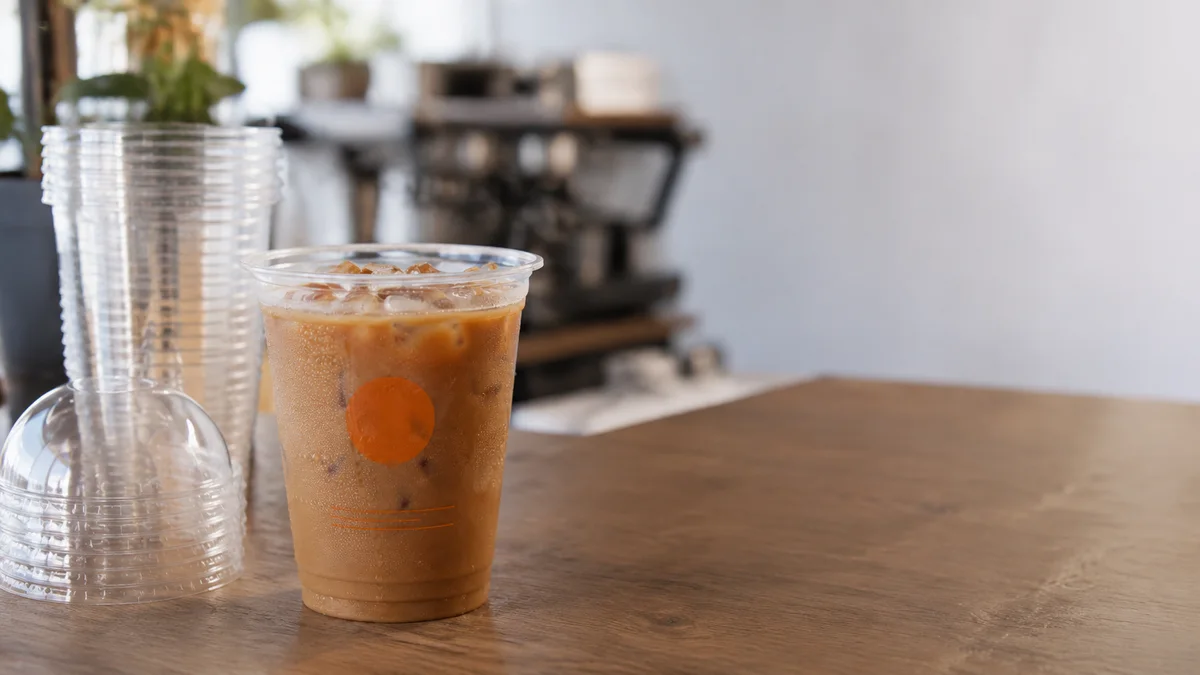
Klare Plastikbecher für kalte Getränke im Vereinigten Königreich: Worauf Sie vor der Bestellung achten sollten
Die meisten britischen Café-Besitzer kaufen ihre klaren Plastikbecher auf die gleiche Weise wie ihre Papierkaffeebecher – gleicher Lieferant, gleiche Größe, Nachbestellung im Autopiloten. Dann beginnen die Beschwerden. Ein Smoothie-Becher zerbricht, wenn ein Kunde ihn zusammendrückt. Ein Bubble-Tea-Becher wird im Kühlschrank trüb. Der Deckel eines Eislattes springt in einer Liefertüte ab, weil Becher und Deckel nicht füreinander ausgelegt waren. Oder ein Kunde postet ein Foto eines Bechers mit der Aufschrift „kompostierbar“ neben einer kommunalen Restmülltonne mit der Bildunterschrift „Wohin damit genau?“
Ein klarer Plastikbecher erfüllt drei Aufgaben. Er hält ein Kaltgetränk ohne Auslaufen. Er zeigt das Getränk so gut aussehend, wie es schmeckt. Und er macht eine Umweltaussage – ob beabsichtigt oder nicht –, denn der Kunde interpretiert die Materialwahl als Aussage über Ihre Werte. Wenn Sie bei einem dieser drei Punkte falsch liegen, stellt der Kunde Ihren gesamten Betrieb infrage. Dieser Leitfaden geht auf die Materialarten, Deckelkompatibilität, Größen und britische Regulierungsaspekte ein, die darüber entscheiden, ob Ihr Kaltgetränke-Becherprogramm funktioniert oder scheitert.
Wichtige Erkenntnisse
- PET, rPET und PLA sind drei verschiedene Materialien mit unterschiedlichen Kosten, Klarheiten und Entsorgungswegen. Ein Becher mit der Aufschrift „biologisch abbaubar“ ist nicht automatisch kompostierbar, und ein Becher mit der Aufschrift „kompostierbar“ benötigt fast sicher eine industrielle Kompostierung – nicht den Gartenkompost Ihres Kunden.
- Die Deckelkompatibilität ist die häufigste Ursache für Verschütten von Kaltgetränken. Kuppeldeckel, Flachdeckel und Deckel mit Strohhalmschlitz eignen sich für verschiedene Getränke, und das Mischen von Marken bei Bechern und Deckeln führt so gut wie garantiert zu Undichtigkeiten.
- Die britischen EPR-Vorschriften (erweiterte Herstellerverantwortung) ab 2026 berechnen niedrigere Gebühren für Verpackungen mit Recyclinganteil. rPET-Becher mit 30 % oder mehr Rezyklatgehalt verursachen niedrigere Compliance-Kosten als Neupet oder PLA.
- Die Bechergröße wird nach dem randvollen Volumen gemessen, nicht nach der Portionsgröße. Ein 12-oz-Becher, der mit Eis und 8 oz Flüssigkeit gefüllt wird, benötigt einen 12-oz-Becher – keinen 10-oz-Becher –, weil das Eis Volumen verdrängt, bevor die Flüssigkeit den Rand erreicht.
- Testen Sie Ihre Becher-Deckel-Kombination immer mit Ihrem kältesten, feuchtesten Getränk an einem heißen Tag. Kondensation verändert den Deckelhalt mehr, als jedes Datenblatt vorhersagt.
Warum Spezifikationen klarer Becher wichtiger sind als der Preis
Marcus betreibt eine Smoothie-Bar in Brighton, die an einem Sommersamstag 300 Gänge macht. In seiner ersten Saison bestellte er die günstigsten 16-oz-Klarsichtbecher von seinem Gastrolieferanten. Es waren Standard-PET-Becher. Die Becher selbst waren in Ordnung. Die Deckel waren eine Katastrophe. Sie sprangen etwa bei jeder zwanzigsten Bestellung ab, meist wenn ein Kunde den Becher von der Theke nahm. Smoothie auf dem Boden. Smoothie auf den Schuhen des Kunden. Smoothie auf der Instagram-Story des Kunden mit der Bildunterschrift „Toller Smoothie, schade um den Deckel.“
Er wechselte zu einem aufeinander abgestimmten Becher-und-Deckel-System eines einzigen Herstellers – gleiches Material, gleiche Größe, aber der Deckel war für diesen speziellen Becherrand ausgelegt. Die Deckelausfallrate sank auf nahezu null. Seine Becherkosten stiegen um 1,2 Pence pro Stück. Seine Smoothie-Verschwendung und Rückerstattungskosten sanken in der Hochsaison um etwa 40 £ pro Woche. Die Lektion ist nicht, dass Marcus billig war. Sondern dass die meisten Betreiber Becher und Deckel als austauschbare Rohstoffe behandeln, obwohl sie als System konstruiert sind. Ein Deckel von Hersteller A passt nicht zuverlässig auf einen Becher von Hersteller B, selbst wenn beide mit „16 oz“ gekennzeichnet sind.
Der britische Markt für Kaltgetränke ist seit 2022 laut Allegra World Coffee Portal jährlich um 18 % gewachsen, angetrieben durch Eiskaffee, Bubble Tea und Smoothie-Ketten, die sich über London hinaus in alle britischen Städte ausdehnen. Unabhängige Cafés, die Kaltgetränkeprogramme einführen, sind das am schnellsten wachsende Segment. Doch die meisten von ihnen können nicht sagen, ob ihre klaren Becher aus PET, rPET oder PLA bestehen – oder warum diese Wahl für ihren Abfallvertrag, ihre EPR-Haftung und die Fähigkeit ihrer Kunden, den Becher tatsächlich zu recyceln, von Bedeutung ist.
PET vs. rPET vs. PLA: Was die Etiketten tatsächlich bedeuten
Drei Materialien dominieren den britischen Markt für klare Becher. Sie sehen hinter der Theke fast identisch aus. Sie kosten unterschiedliche Beträge. Sie gehen nach Gebrauch an völlig unterschiedliche Orte. Sie zu verwechseln, ist einer der teuersten Fehler, den ein unabhängiger Betreiber machen kann.
PET (Polyethylenterephthalat) ist der Standard-Klarsichtbecher. Es wird aus jungfräulichem petrochemischem Ausgangsmaterial hergestellt. Es ist im britischen Hausmüllsystem vollständig recycelbar – PET ist derselbe Kunststoff wie Getränkeflaschen, und das Vereinigte Königreich hat die Infrastruktur, es zu recyceln. Ein handelsüblicher 12-oz-PET-Becher kostet in Großmengen etwa 4–6 Pence pro Stück. PET-Becher haben eine hervorragende Klarheit, gute Schlagfestigkeit und werden bei Kälte nicht spröde. Sie sind die Standardwahl für die meisten britischen Kaltgetränkebetreiber und die Benchmark, an der Alternativen gemessen werden sollten.
rPET (recyceltes PET) ist PET aus post-consumer Recyclingmaterial – typischerweise Getränkeflaschen, die gesammelt, gewaschen, zu Flocken verarbeitet und zu neuer Becherfolie aufbereitet werden. Es ist in Klarheit, Festigkeit und Temperaturverhalten funktional identisch mit Neupet. Es kostet etwa 10–15 % mehr als Neupet, sodass ein 12-oz-rPET-Becher etwa 5–7 Pence pro Stück kosten kann. Der Vorteil liegt auf regulatorischer und reputationsbezogener Ebene. Ab April 2026 erhebt die britische Kunststoffverpackungssteuer 228,82 £ pro Tonne auf Kunststoffverpackungen mit weniger als 30 % Recyclinganteil. rPET-Becher mit 30 % oder mehr Rezyklatgehalt sind befreit. Sie tragen auch eine Umweltaussage, die Sie belegen können – „hergestellt aus recycelten britischen Getränkeflaschen“ ist wahr, überprüfbar und für Kunden leicht verständlich.
PLA (Polymilchsäure) ist ein Biokunststoff aus fermentierter Pflanzenstärke, meist Mais oder Zuckerrohr. Es sieht fast identisch mit PET aus – klar, starr, glänzend – ist aber chemisch und strukturell anders. PLA-Becher sind nach EN 13432 als industriell kompostierbar zertifiziert. Sie sind im britischen Hausmüllsystem nicht recycelbar. Sie sind nicht heimkompostierbar (sie benötigen die anhaltende Hitze und mikrobielle Aktivität einer industriellen Kompostieranlage). Und sie sind mit bloßem Auge nicht von PET zu unterscheiden, was bedeutet, dass ein PLA-Becher im PET-Recyclingbehälter den Strom verunreinigt.
PLA-Becher kosten 50–80 % mehr als PET – etwa 8–11 Pence pro Stück für einen 12-oz-Becher. Sie sind etwas weniger starr als PET, was bei größeren Größen (16 oz und mehr) eine Rolle spielt – sie können sich labbrig anfühlen. Und sie haben eine niedrigere Wärmeformbeständigkeitstemperatur, was für Kaltgetränke irrelevant ist, aber bedeutet, dass sie sich verziehen, wenn sie für heiße Flüssigkeiten über etwa 40 °C verwendet werden.
Der praktische Entscheidungsrahmen ist einfach. Wenn Ihr lokaler Abfallvertrag gewerbliche Kompostierung beinhaltet und Sie in einem geschlossenen Kreislauf (Kantine, Festival, Büro, Universitätscampus) arbeiten, wo Sie die Tonnen kontrollieren, ist PLA eine vertretbare Wahl. Wenn Sie über ein Ladengeschäft in der Fußgängerzone verkaufen, wo Kunden den Becher in einer Straßentonne oder zu Hause entsorgen, ist PET oder rPET die ökologisch verantwortungsvollere Option, da es tatsächlich über das bestehende britische System recycelt werden kann. Ein PLA-Becher in einer Straßentonne landet auf der Deponie oder wird verbrannt und kostet doppelt so viel, um dorthin zu gelangen.
Ein Materialdetail, das Betreiber überrascht: Nicht alle klaren PLA-Becher sind zu 100 % PLA. Einige sind mit PLA beschichtetes Papier, andere sind PLA-Blends mit anderen Biopolymeren. Wenn Ihr Kompostierungsvertrag „reines PLA“ vorschreibt, überprüfen Sie die Becherspezifikation, bevor Sie sich auf eine Palettenbestellung festlegen.
Deckelkompatibilität: Warum das Mischen von Marken garantiert ausläuft
Becherränder sind nicht genormt. Ein 12-oz-PET-Becher von Hersteller A hat einen anderen Randdurchmesser und ein anderes Profil als ein 12-oz-PET-Becher von Hersteller B. Die Unterschiede betragen Bruchteile von Millimetern, aber der Deckelhalt hängt von einer Presspassung zwischen Deckelnut und Becherrand ab. Ein Unterschied von 0,3 mm im Randdurchmesser verändert die Klemmkraft so stark, dass ein Deckel, der fest auf Becher A einrastet, mit bloßem Fingerdruck von Becher B springt.
Die Regel ist einfach und absolut: Kaufen Sie Becher und Deckel immer vom selben Hersteller. Mischen Sie niemals Marken. Gehen Sie nie davon aus, dass „12-oz-Flachdeckel“ auf alle 12-oz-Becher passt. Testen Sie jede neue Becher-Deckel-Kombination, bevor Sie eine Produktionsbestellung aufgeben.
Drei Deckeltypen decken die überwältigende Mehrheit der britischen Kaltgetränkeanwendungen ab:
Flachdeckel sind Standard für Eiskaffee, Eistee, Erfrischungsgetränke und alle Getränke ohne Toppings. Sie haben eine kleine Trinktülle oder ein Trinkloch und schließen bündig mit dem Becherrand ab. Sie sind die günstigste Option und am sichersten gegen Verschütten, da das Deckelprofil niedrig und die Dichtfläche durchgehend ist. Flachdeckel eignen sich für Getränke, die durch den Deckel getrunken werden. Sie funktionieren nicht für Bubble Tea (die Tapiokaperlen verstopfen das Trinkloch), für dicke Smoothies oder Getränke mit Schlagsahnetopping.
Kuppeldeckel ragen über den Becherrand hinaus, um Schlagsahne, Schaum, Fruchtstücke oder dicke Mixgetränke aufzunehmen. Sie kosten etwas mehr als Flachdeckel (etwa 0,5–1 Pence extra pro Deckel) und sind im Transport weniger sicher, da die Kuppel Hebelwirkung gegen die Randdichtung erzeugt. Wenn der Becher seitlich umkippt, springt ein Kuppeldeckel leichter ab als ein Flachdeckel. Kuppeldeckel sind für Frappés, Milchshakes und alle Getränke, bei denen das Topping Teil des Produkterlebnisses ist, unerlässlich. Sie sind für Eislattes oder Erfrischungsgetränke unnötig.
Deckel mit Strohhalmschlitz kombinieren ein flaches oder niedriges Kuppelprofil mit einem kreuzförmigen Einschnitt für einen Strohhalm – meist einen breiten Strohhalm für Bubble Tea oder Smoothies. Die Schlitzgröße ist wichtig. Ein Standardschlitz (ca. 6 mm) passt für einen normalen Trinkhalm. Ein Boba-Schlitz (ca. 10–12 mm) passt für die breiten Strohhalme, die für Tapiokaperlen benötigt werden. Wenn Sie die falsche Schlitzgröße bestellen, kann Ihr Kunde das Produkt nicht durch den Deckel trinken und entfernt ihn entweder (Verschüttungsrisiko) oder beschwert sich (Bewertungsrisiko).
Eine Deckelspezifikation, die selten diskutiert wird, aber sehr wichtig ist: Anti-Kondensationsbelüftung. Ein gut gestalteter Kuppeldeckel hat ein kleines Entlüftungsloch, das den Druck ausgleicht und verhindert, dass sich Kondenswasser im Inneren der Kuppel sammelt. Angesammeltes Kondenswasser tropft auf das Getränk-Topping zurück, lässt Schlagsahne ausfließen und Schaum zusammenfallen. Wenn die Kuppeldeckel Ihres Lieferanten kein Entlüftungsloch haben, suchen Sie sich einen anderen Lieferanten.
Größenbestimmung: Warum das randvolle Volumen nicht der Portionsgröße entspricht
Bechergrößen werden in Flüssigunzen bis zum Rand gemessen – das Volumen, das der Becher fasst, wenn er bis zur absoluten Oberkante gefüllt ist. Niemand füllt ein Kaltgetränk bis zum Rand. Eis nimmt 25–40 % des Bechervolumens ein. Ein 12-oz-Becher, der zu einem Drittel mit Eis gefüllt ist, fasst etwa 8 oz Flüssigkeit. Wenn Ihr Menü einen 12-oz-Smoothie auflistet, benötigen Sie einen 16-oz-Becher, um 12 oz Flüssigkeit plus Eis aufzunehmen.
Die standardmäßigen britischen Kaltbechergrößen und ihre praktischen Anwendungen:
9–10 oz – Kindergetränke, Espresso-Eisgetränke, Probierbecher und kleine Smoothies. Dies ist die kleinste Standardgröße für Klarsichtbecher. Sie eignen sich für einen einfachen Eislatte mit wenig Eis. Sie sind zu klein für jedes Getränk, das einen breiten Strohhalm benötigt.
12 oz – Die Arbeitstiergröße für Eislattes, Eistrinkkaffee, Cold Brew und Standard-Erfrischungsgetränke. Fasst etwa 8 oz Flüssigkeit mit Eis. Dies ist die am häufigsten bevorratete Größe in britischen Cafés und der sicherste Standard für ein Eiskaffeeprogramm.
16 oz – Der Standard für normale Smoothies, Bubble Tea, Frappés und Eismocas mit Schlagsahne. Fasst etwa 11–12 oz Flüssigkeit mit Eis. Dies ist das Volumen, bei dem die Bechersteifigkeit eine Rolle spielt – ein 16-oz-PLA-Becher fühlt sich bei gleicher Wandstärke deutlich flexibler an als ein 16-oz-PET-Becher.
20–22 oz – Große Smoothies, große Bubble Teas, Mahlzeitenersatz-Shakes. Fasst etwa 14–16 oz Flüssigkeit mit Eis. Bei dieser Größe wird die Wandstärke unverhandelbar. Ein dünnwandiger 20-oz-Becher verformt sich unter dem Gewicht der Flüssigkeit, besonders bei warmem Wetter, wenn der Kunststoff weicher wird. Suchen Sie nach Bechern, die als „extra heavy duty“ bezeichnet werden oder eine Wandstärke von mindestens 0,35 mm bei dieser Größe aufweisen.
24 oz – Die größte Standardgröße. Wird für Teilgetränke, extragroße Bubble Teas und Smoothie-Mahlzeitenersatz verwendet. Wird von den meisten allgemeinen Gastrolieferanten nicht bevorratet – in der Regel Sonderbestellung. Bei dieser Größe sind Kuppeldeckel nahezu universell, da das Getränk normalerweise Toppings oder Schaum hat.
Eine Größenfalle, die Betreiber erwischt, die ihr Menü erweitern: Bechervolumen und Deckelkompatibilität ändern sich an Größenübergängen. Ein 16-oz-Flachdeckel passt nicht auf einen 16-oz-Kuppelbecher, selbst vom selben Hersteller, da der Kuppelbecher ein anderes Randprofil für den Kuppeldeckel hat. Bestätigen Sie immer die Deckelkompatibilität für jede spezifische Kombination aus Größe und Deckeltyp.
Britische Vorschriften und Nachhaltigkeit: Was Ihr Becher über Ihr Unternehmen aussagt
Vier regulatorische Rahmenwerke beeinflussen, wie britische Cafés klare Plastikbecher kaufen und verwenden. Ignorieren eines davon schafft Haftung, die Sie nicht brauchen.
Das Einwegplastikverbot (Oktober 2023, England) verbietet Becher und Behälter aus Polystyrol. Standard-PET- und rPET-Becher sind nicht betroffen. PLA-Becher sind nicht betroffen. Das Verbot traf hauptsächlich das günstigste Marktsegment – Polystyrolbecher, die nie recycelbar waren und keine Umweltrechtfertigung hatten. Wenn Sie einen klaren Becher von einem seriösen britischen Lieferanten verwenden, sind Sie mit ziemlicher Sicherheit konform mit dem Verbot. Die umfassendere Botschaft ist, dass die Plastikregulierung strenger wird, nicht lockerer, und die Becher, die Sie heute wählen, könnten innerhalb von 3–5 Jahren Einschränkungen unterliegen.
Die britische Kunststoffverpackungssteuer (April 2022, Aktualisierung April 2026) erhebt 228,82 £ pro Tonne auf Kunststoffverpackungen, die im Vereinigten Königreich hergestellt oder importiert werden und weniger als 30 % Recyclinganteil enthalten. Dies gilt für Unternehmen, die mehr als 10 Tonnen Kunststoffverpackungen pro Jahr verarbeiten – weit über der Schwelle für die meisten unabhängigen Cafés. Die Steuer fließt jedoch durch die Lieferkette. Ihr Becherlieferant zahlt die Steuer auf Neupet-Becher und gibt die Kosten im Stückpreis an Sie weiter. rPET-Becher mit 30 % oder mehr Rezyklatgehalt sind befreit, was ein Grund dafür ist, dass die Preislücke zwischen PET und rPET von etwa 25 % im Jahr 2022 auf 10–15 % heute geschrumpft ist. Mit steigender Steuer (sie ist an den VPI gekoppelt und wird jährlich überprüft) wird rPET zunehmend kostenwettbewerbsfähig.
Die erweiterte Herstellerverantwortung (EPR, schrittweise ab 2025–2027) wendet modulierte Gebühren basierend auf der Recyclingfähigkeit der Verpackung an. Becher, die über die britische Hausmüllsammlung recycelt werden können (PET und rPET), ziehen niedrigere Gebühren nach sich. Becher, die spezielle Entsorgungswege erfordern (PLA, kompostierbare Kunststoffe), ziehen höhere Gebühren nach sich, da das Vereinigte Königreich keine flächendeckende industrielle Kompostierungsinfrastruktur für Post-Consumer-Verpackungen hat. Dies führt zu einem kontraintuitiven Ergebnis: Ein als „umweltfreundlich“ vermarkteter PLA-Becher kann in EPR-Gebühren teurer sein als ein Standard-PET-Becher, der in den Recyclingbehälter wandert. Für die meisten Cafés in der Fußgängerzone ist rPET die nachhaltigste und haftungsärmste Wahl – Recyclinganteil reduziert die Kunststoffverpackungssteuer, und die Recyclingfähigkeit über die Hausmüllsammlung hält die EPR-Gebühren niedrig.
Der britische Green Claims Code (CMA, durchgesetzt ab 2022) verlangt, dass Umweltaussagen auf Verpackungen wahrheitsgemäß, klar und belegt sind. Ein Becher mit der Aufschrift „biologisch abbaubar“ ohne weitere Qualifikation ist wahrscheinlich nicht konform. Ein Becher mit der Aufschrift „kompostierbar“ muss industrielle oder häusliche Kompostierung angeben und eine Zertifizierung nachweisen (EN 13432 für industriell, OK Compost Home oder gleichwertig für häuslich). Ein Becher mit der Aufschrift „recycelbar“ muss in der Praxis über die britische Hausmüllsammlung recycelbar sein – nicht nur im Labor oder in einer Spezialeinrichtung. Die CMA hat seit 2023 Durchsetzungsmaßnahmen gegen mehrere Verpackungsunternehmen wegen irreführender grüner Behauptungen ergriffen. Ihr Becherlieferant sollte eine Konformitätserklärung (DoC) und Zertifizierungsdokumentation für jede Umweltaussage auf seinen Bechern vorlegen können.
Was dies für das unabhängige britische Café in der Praxis bedeutet: Kaufen Sie rPET-Becher mit zertifiziertem Recyclinganteil über 30 %. Sie kommen in den Recyclingbehälter. Sie sind von der Kunststoffverpackungssteuer befreit. Sie tragen eine Umweltaussage, die wahr, klar und belegbar ist („hergestellt aus recycelten britischen Getränkeflaschen“). Und sie kosten etwa 5–7 Pence pro Becher – etwa 1 Penny mehr als Neupet. Für ein Café, das 200 Kaltgetränke pro Tag ausgibt, sind das zusätzliche 2 £ täglich für eine Verpackung, die gesetzeskonform, wirklich recycelbar und für Kunden leicht verständlich ist.
Wie Sie klare Becher testen, bevor Sie sich für eine Großbestellung entscheiden
Lieferanten schicken Muster. Die meisten Betreiber füllen einen Becher mit Wasser, setzen einen Deckel auf, schütteln ihn und entscheiden. Das sagt Ihnen so gut wie nichts. Drei Tests sind wichtig.
Der Kondensationstest. Füllen Sie den Becher mit Eis und Wasser. Setzen Sie den Deckel auf. Lassen Sie ihn 30 Minuten bei Raumtemperatur auf einer Theke stehen. Heben Sie ihn mit einer Hand an. Wenn der Becher rutscht oder sich deutlich weniger starr anfühlt als im trockenen Zustand, verliert das Material durch Kondensation an Strukturintegrität – ein häufiges Problem bei dünneren PLA-Bechern und minderwertigen PET-Bechern. Ein Becher, der diesen Test übersteht, übersteht auch die Hand eines Kunden an einem warmen Tag.
Der Deckelhaltetest. Füllen Sie den Becher bis zum normalen Servierniveau (Flüssigkeit plus Eis). Setzen Sie den Deckel mit normalem Handdruck auf – nicht übermäßig festdrücken. Halten Sie den Becher nur am Deckel und heben Sie ihn 30 cm über den Tisch. Wenn sich der Becher unter seinem eigenen Gewicht vom Deckel löst, ist die Deckelpassung unzureichend. Dieser Test simuliert einen Kunden, der den Becher am Deckel anhebt – etwa 30 % der Kunden heben laut Verpackungsindustrie-Forschung einen To-Go-Becher so an.
Der Stapeltest. Füllen Sie drei Becher mit eisgekühlter Flüssigkeit bis zum normalen Servierniveau. Setzen Sie die Deckel auf. Stapeln Sie den zweiten Becher auf den ersten und den dritten auf den zweiten. Lassen Sie ihn 15 Minuten stehen. Heben Sie den Stapel am unteren Becher an. Wenn ein Deckel abspringt oder der Stapel instabil wird, haben die Becher nicht genügend Stauchfestigkeit für den Lieferstapel – eine häufige Fehlerstelle bei größeren Größen (16 oz und mehr) in Liefertüten.
Stellen Sie Ihrem Lieferanten vier Fragen, bevor Sie die erste Bestellung aufgeben. Aus welchem Material besteht der Becher (PET, rPET oder PLA)? Wie hoch ist der Recyclinganteil des Bechers? Sind Becher und Deckel als aufeinander abgestimmtes Paar konstruiert und getestet? Können Sie eine Konformitätserklärung für Lebensmittelkontakt und ein Zertifikat für die Recyclinganteilsangabe vorlegen? Ein Lieferant, der bei einer dieser Fragen zögert, verkauft importierte Ware ohne aussagekräftige Qualitätssicherung weiter. Für ein Produkt, das die Lippen Ihres Kunden berührt, ist das nicht akzeptabel.
Häufig gestellte Fragen
Was ist der Unterschied zwischen PET- und rPET-Bechern? PET wird aus jungfräulichem petrochemischem Ausgangsmaterial hergestellt. rPET wird aus recyceltem Post-Consumer-Kunststoff hergestellt, typischerweise aus britischen Getränkeflaschen. Sie sehen identisch aus, leisten identisch und kommen beide in den Recyclingbehälter. rPET kostet etwas mehr (10–15 %), ist aber von der britischen Kunststoffverpackungssteuer befreit, wenn der Recyclinganteil 30 % übersteigt.
Können PLA-Becher in den Recyclingbehälter? Nein. PLA-Becher sind nicht über die britische Hausmüllsammlung recycelbar. Sie sind für industrielle Kompostierung zertifiziert (EN 13432), aber mit bloßem Auge nicht von PET zu unterscheiden, sodass sie den PET-Recyclingstrom verunreinigen, wenn sie in Recyclingbehälter gelangen. Wenn Sie PLA-Becher verwenden, benötigen sie einen eigenen Abfallstrom und einen gewerblichen Kompostierungsvertrag.
Wie viele Becher sollte ich für ein neues Kaltgetränkeprogramm bestellen? Beginnen Sie mit 500 Bechern in Ihrer voraussichtlich meistverkauften Größe plus 500 passende Deckel. Das gibt Ihnen etwa zwei Wochen Vorrat für ein Café mit 35–40 Kaltgetränken pro Tag. Kaufen Sie keine Palette (50.000+ Becher), bevor Sie Becher, Deckel und Kundenresonanz mindestens einen vollen Monat getestet haben. Die Becherspezifikation mitten in der Saison zu ändern, ist teuer.
Warum werden meine Becher im Kühlschrank trüb? Kondensation an der Außenseite eines kalten Bechers bei feuchten Bedingungen ist normal und tritt bei allen Materialien auf. Trübung auf der Innenseite des Bechers (die das Getränk berührende Oberfläche) deutet darauf hin, dass das Bechermaterial nicht vollständig kältestabil ist oder während der Lagerung Feuchtigkeit aus der Umgebung aufgenommen hat. Dies ist bei PLA häufiger als bei PET. Lagern Sie Becher in einer trockenen, temperaturstabilen Umgebung und rotieren Sie den Bestand nach dem FIFO-Prinzip.
Brauche ich unterschiedliche Becher für Lieferung vs. Vor-Ort-Verkauf? Ja, ab 16 oz. Bei der Lieferung kommt es zu Stapelung, Vibrationen und Temperaturzyklen, die an der Theke nicht auftreten. Verwenden Sie eine schwerere Wandstärke (0,35 mm Minimum bei 16 oz+) für Lieferbecher und Flachdeckel (keine Kuppeldeckel) für die sicherste Abdichtung während des Transports. Eine kleine Investition in schwerere Becher für Lieferbestellungen amortisiert sich durch reduzierte Rückerstattungen für Verschüttungen.
Sind Papierkaltbecher eine bessere Umweltwahl als rPET? Nicht unbedingt. Die meisten Papierkaltbecher haben eine PE- oder PLA-Beschichtung, die sie am Ende ihrer Lebensdauer zu einem Faser-Komposit macht – weder als Papier recycelbar noch ohne industrielle Verarbeitung kompostierbar. rPET-Becher sind mechanisch über das etablierte britische Flaschen- und Behälterrecyclingsystem recycelbar. Es sei denn, Ihr Papierbecher ist als weitgehend recycelbar über die britische Hausmüllsammlung zertifiziert (sehr wenige sind es), ist rPET die ökologisch vertretbarere Wahl für Kaltgetränke.
Fazit
Ein klarer Plastikbecher ist der günstigste Artikel in Ihrer Servierlinie und derjenige, den Ihr Kunde während des gesamten Getränks anstarrt. Ein Becher, der reißt, ausläuft, beschlägt oder falsche Umweltversprechen macht, sagt dem Kunden, dass Sie Abstriche gemacht haben. Ein Becher, der seine Klarheit behält, den Deckel hält und eine wahrheitsgetreue, überprüfbare Nachhaltigkeitsgeschichte trägt, sagt ihnen, dass Sie ein Profi sind, der auf Details achtet.
Die vier Entscheidungen, die zählen, sind das Material (rPET für die meisten britischen Cafés in der Fußgängerzone), die Deckelkompatibilität (aufeinander abgestimmtes Becher-Deckel-System, niemals gemischt), die Größenbestimmung (randvolles Volumen, nicht Portionsgröße) und die regulatorische Positionierung (rPET mit über 30 % Recyclinganteil minimiert sowohl Steuerlast als auch Umweltauswirkungen).
Überprüfen Sie die Spezifikation der Becher, die Sie derzeit verwenden. Wenn Sie den Materialtyp, den Recyclinganteil in Prozent und die Deckelkompatibilitätsgarantie nicht angeben können, rufen Sie Ihren Lieferanten an und fragen Sie nach. Wenn Ihr Lieferant nicht antworten kann, suchen Sie sich einen anderen Lieferanten. Ein Café, das 200 Kaltgetränke pro Tag ausgibt, gibt etwa 3.000–5.000 £ pro Jahr für klare Becher und Deckel aus. Die richtige Spezifikation zu wählen, kostet nichts und spart in der Regel 10–20 % bei Abfall, Rückerstattungen und Regulierungskosten.
Stöbern Sie in unserem Sortiment an rPET-Klarsichtbechern mit passenden Deckeln in Größen von 9 oz bis 24 oz auf okeypackaging.com oder fordern Sie ein Probenpaket an, um es mit Ihrem eigenen Kaltgetränke-Menü zu testen.