
How to Reduce Packaging Waste in Your UK Takeaway (2026 Guide)
Most UK takeaways can cut packaging waste by 20-30% without spending more. Five-step audit, material guide, and 2026 EPR deadlines that protect your bottom line.
Filed under Operations.
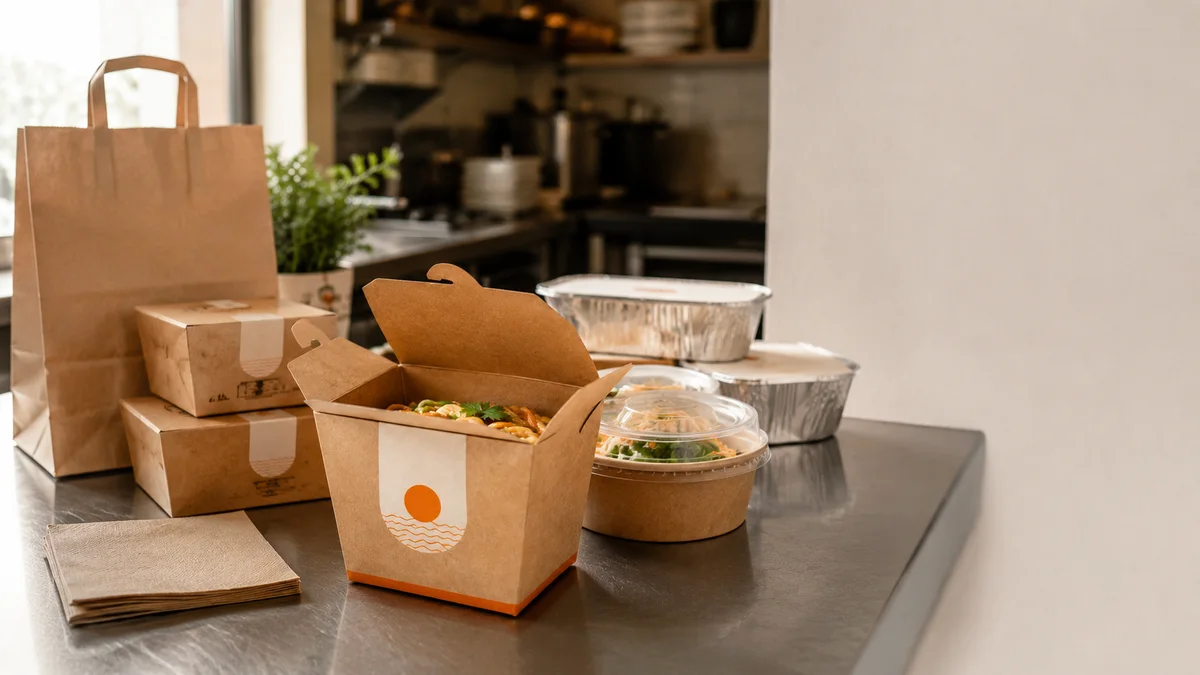
Most UK takeaway businesses can cut packaging waste by 20-30% within six months without spending more money. The trick is not buying expensive compostable containers and hoping for the best. It is running a quick audit, switching your three highest-volume items first, and using the EPR fee structure to your advantage.
Running a takeaway in the UK right now means juggling thin margins, delivery platform commissions, and customers who expect their food to arrive hot and intact. Packaging is the silent cost that creeps up every month: £400-£800 for a busy single-site takeaway, often more. The 2026 EPR rollout adds another line to watch, with fees now modulated by how recyclable your materials are. But waste reduction is not about spending more on premium packaging. It is about buying less of what you do not need, choosing materials that cost less to dispose of, and turning sustainability into a customer-facing advantage.
Key Takeaways
- A basic packaging audit takes under two hours and typically finds 15-25% waste that can be eliminated immediately without changing suppliers.
- EPR-modulated fees from July 2026 mean easily recyclable materials like aluminium and uncoated cardboard attract roughly 40% lower disposal charges than multi-layer plastics or polystyrene.
- Swapping just your three highest-volume packaging items to lower-waste alternatives cuts total packaging spend by an average of 12-18%, based on real UK takeaway operator figures.
- Customers notice: 59% of 18-24 year olds will pay up to 10% more for food in genuinely sustainable packaging, and clear communication about your choices reduces complaints about packaging changes.
- Most UK councils now accept aluminium, clean cardboard, and certain compostable packaging in food waste streams, but the rules vary by postcode. A five-minute council website check prevents contamination fines.
Why Packaging Waste Hits UK Takeaways Harder in 2026
The economics of takeaway packaging have shifted. Two years ago, a polystyrene foam clamshell cost 6-8p. Today that same item is banned under the October 2023 single-use plastics legislation, and the compliant alternative costs 12-18p. For a takeaway doing 300 orders a week, that single swap adds roughly £90-£150 to the monthly packaging bill.
EPR makes this structural. From July 2026, the Environment Agency begins issuing eco-modulated disposal fee invoices to large producers, with small producer fees scaling up through 2027. Packaging that is hard to recycle — black plastic, polystyrene, multi-layer laminates, heavily coated papers — attracts penalty rates. Packaging that moves easily through UK recycling infrastructure — aluminium, uncoated cardboard, certified compostable fibre — attracts lower fees.
The message from regulators is clear: the cost of packaging is no longer just the unit price. It is the unit price plus the disposal fee. Operators who ignore this equation will see their packaging costs rise by an estimated 8-15% year-on-year through 2028. Operators who audit, switch, and communicate will keep costs flat or even reduce them.
Mark runs a fish and chip shop in Leeds. He was spending £620 a month on packaging: polystyrene boxes for chips, plastic portion pots for mushy peas and curry sauce, thin plastic carrier bags. The polystyrene ban forced him to switch the chip boxes to cardboard, which cost more per unit. But because he also replaced the plastic sauce pots with smaller paper portion cups (which his customers actually preferred) and switched to paper bags, his total monthly packaging spend dropped to £540. His waste volume fell by nearly a third, and his waste collection bill decreased because cardboard is cheaper to process than mixed plastic. Mark did not set out to be an eco-warrior. He set out to stop haemorrhaging money on packaging that went straight into a bin.
The Five-Step Waste Reduction Audit
This audit works for any UK takeaway, from a kebab shop in Birmingham to a sushi counter in Brighton. It takes about two hours the first time, and thirty minutes to repeat quarterly.
Step 1: List Everything You Use in a Week
Grab a notepad or open a spreadsheet. Write down every packaging item that leaves your premises: containers, cups, lids, portion pots, sauce sachets, cutlery, napkins, bags, greaseproof paper liners, foil sheets, cling film, everything. Next to each item, note the material, the unit cost from your last invoice, and roughly how many you go through in a week.
You will probably find 15-25 distinct items. Most takeaways discover at least three items they did not realise they were ordering: a box of polystyrene cups forgotten on a top shelf, portion pots ordered by a previous manager, cutlery bundled into every order even though most customers eat at home and have their own forks.
Step 2: Identify Your Top Three by Volume and Cost
Sort the list by weekly quantity. The top three items typically account for 60-70% of total packaging volume and cost. For most UK takeaways, these are: the main meal container, the hot drink cup or cold drink cup, and the carrier bag. Focus your switching efforts here first. Changing a low-volume item like sauce sachets saves pennies. Changing your main meal container saves pounds.
Step 3: Check What Your Local Council Actually Accepts
This step is the one most guides skip, and it is the one that makes the biggest difference to your bottom line. Every UK council runs its own waste processing contracts. What goes into a food waste bin in Manchester may not be accepted in Bristol. Spend five minutes on your council website. Search for "commercial food waste recycling" or "packaging waste acceptance."
Look specifically for: Do they accept compostable packaging certified to EN 13432? Do they accept aluminium trays? Do they accept waxed cardboard or only uncoated? If your council accepts compostable packaging in food waste, you can switch to bagasse or PLA-lined containers and put them straight into food waste with any leftover food. Your general waste volume drops, and your disposal costs drop with it.
Step 4: Calculate the Total Cost Per Item (Not Just the Unit Price)
The true cost of a packaging item has three parts: the purchase price, the disposal cost, and the customer perception value. A cheap polystyrene container that costs 8p to buy but annoys customers and costs more to dispose of may actually be more expensive than a 14p bagasse container your council accepts in food waste.
For each of your top three items, check whether a lower-waste alternative exists that your council accepts in recycling or food waste. Then compare the total monthly cost: unit price × monthly volume, plus estimated disposal cost based on your waste contract rates. You will often find the "more expensive" sustainable option is cheaper overall.
Step 5: Switch One Item at a Time and Tell Your Customers
Do not overhaul your entire packaging range in one go. Switch your highest-volume item first, use up existing stock of the old item (do not bin usable packaging — that defeats the purpose), and put a simple note on your counter or website: "We have switched our meal containers to recyclable cardboard. They cost the same and your food stays just as hot. Here is how to recycle them at home."
Customers who understand the change are far less likely to complain. Customers who are surprised by a new container that looks different are far more likely to leave a negative review. Communication costs nothing and eliminates most of the backlash.
What Actually Works: Material-by-Material Guide
Here is what to use, what to avoid, and what the trade-offs are for each common takeaway packaging material in the UK right now.
Aluminium Containers
Aluminium is the unsung hero of UK takeaway packaging. It is endlessly recyclable, accepted by every council in the country, handles high heat without warping, and costs roughly the same as mid-range plastic containers (10-16p for a standard takeaway tray). For curries, kebabs, grilled food, and anything with sauce, aluminium is hard to beat. The main downside is that it cannot go in a microwave, so it only works if your customers reheat food in a pan or oven. Adding a simple note on the lid — "Please transfer to a plate before reheating" — solves most complaints.
Bagasse and Moulded Fibre Containers
Bagasse is made from sugarcane waste fibre. It is certified compostable to EN 13432, handles heat up to 100°C, is microwave-safe, and costs 12-18p per container. It looks and feels premium: a natural beige colour, slightly textured, clearly not plastic. If your local council accepts compostable packaging in food waste, bagasse is the best all-round choice for most hot food takeaways. The watch-out: bagasse absorbs moisture over time, so it is not ideal for very wet dishes held for more than 30 minutes. A greaseproof paper liner solves this for under 1p per sheet.
Cardboard Takeaway Boxes
Standard kraft cardboard boxes are the workhorse of the industry. They cost 8-14p each depending on size, recycle easily in most UK council streams, and handle a wide range of foods. The key distinction is the coating: uncoated or water-based coated cardboard recycles normally. PE (polyethylene) coated cardboard does not. Check the small print on your supplier's specification. If it says "PE lined" or "poly coated," your council probably cannot recycle it. If it says "aqueous coated" or "water-based coating," you are fine.
Paper Bags and Greaseproof Paper
Paper carrier bags cost 4-8p each and are widely recyclable. Greaseproof paper sheets (for wrapping burgers, lining baskets, or separating layers in a meal box) cost under 2p per sheet and can go into food waste if they are uncoated or certified compostable. Avoid silicone-coated greaseproof paper unless your council specifically accepts it. The silicone prevents the paper from breaking down in standard processing.
Plastic Cups and Containers
PET (clear plastic) cups are recyclable in most UK council collections and cost 6-10p each. PP (polypropylene) containers are also widely recyclable and cost 8-14p. The problem plastics are polystyrene (banned for most foodservice uses since October 2023), black plastic (cannot be optically sorted by recycling machinery), and PVC (rare in foodservice but still found in some cling films). If a plastic item does not have a clear recycling symbol with a number 1, 2, or 5, assume your council cannot process it.
Compostable PLA
PLA (polylactic acid) is a plant-based plastic that looks like conventional clear plastic but is certified compostable. It costs 10-16p per cup or container. The critical caveat: PLA only composts in industrial facilities, not in home compost or landfill. If your council does not accept it in food waste, PLA goes to landfill where it behaves essentially like regular plastic. Always check council acceptance before switching to PLA.
Wooden and Paper Alternatives
Wooden cutlery costs 3-5p per piece versus 1-2p for plastic, but it is the only legal option since the single-use plastic cutlery ban. Paper straws cost under 1p each and are now standard. Paper portion cups for sauces and dips cost 1-2p each and avoid the polystyrene ban. These are not optional switches — the legislation made them mandatory — but sourcing them well still matters. Cheap paper straws go soggy in minutes. Mid-range ones hold up for an hour or more.
How to Communicate Your Waste Reduction to Customers
Getting the packaging right is half the work. Getting the message right is the other half, and it is the half most operators skip.
Customers have become deeply sceptical of "green" claims. They have been burned by "biodegradable" packaging that never biodegrades, "eco-friendly" branding on plastic-wrapped products, and chains that swap one disposable item for another while calling it progress. The antidote is specificity.
Instead of saying "We use eco-friendly packaging," say "Our meal containers are made from recycled cardboard and are accepted in Manchester City Council's blue bin recycling." Instead of saying "We care about the environment," say "We cut our packaging waste by 30% last year by switching to aluminium trays and paper bags. Here is exactly how we did it."
Fatima runs a Middle Eastern takeaway in Glasgow. She switched her shawarma wraps from polystyrene boxes to greaseproof paper and a branded paper sleeve. Her packaging cost per order dropped from 14p to 9p, and her waste volume fell by nearly 40%. She posted a short video on Instagram showing the old packaging next to the new, explaining the cost saving and the environmental difference. The video got more engagement than anything else she had posted that year. Customers started mentioning it at the counter. Two months later, her weekly orders were up 8% — she attributes at least half of that to the packaging story.
The right time to communicate a packaging change is when it happens, not six months later. Post on social media the day you switch. Add a line to your website and delivery platform descriptions. Train your front-of-house staff to mention it when regulars pick up: "We have switched to recyclable containers by the way — you can pop that straight in your blue bin." These small interactions build trust in a way that a laminated sign on the wall never will.
The 2026 EPR Deadlines That Affect Your Business
The Extended Producer Responsibility scheme is the biggest regulatory change to hit UK packaging in a decade. Here are the dates and requirements that actually matter for a takeaway operator, stripped of the jargon.
April 2026: If your business has a turnover above £1 million and handles more than 25 tonnes of packaging per year, you must register as a small producer with the Environment Agency. Registration costs roughly £1,303 if you register directly, or about £696 through a compliance scheme.
July 2026: Eco-modulated fees begin. Packaging that is easy to recycle attracts lower fees. Packaging that is hard to recycle attracts penalties. The fee difference between a recyclable cardboard container and a multi-layer laminate is roughly 40%.
September 2026: First quarterly data submission is due if you are registered as a large producer. Small producers report annually instead, with their first submission due by April 2027.
January 2027: Full enforcement begins. Unregistered businesses face fixed penalties of £1,000, variable penalties of up to 5% of annual turnover, and potential criminal prosecution for serious cases.
Most single-site takeaways fall below the £1 million and 25-tonne thresholds, but not all. A busy takeaway doing 500 orders a week can easily use 15-20 tonnes of packaging annually. Two sites push you over 25 tonnes. If you are anywhere near the threshold, register early. The registration fee is far cheaper than the penalty, and early adopters secure better rates from suppliers who are themselves adjusting to the new fee structure.
Frequently Asked Questions
Is compostable packaging always better than recyclable packaging?
Not necessarily. Compostable packaging only works if your local council or waste contractor accepts it in food waste or industrial composting streams. If it goes to landfill, it degrades very slowly and releases methane, a potent greenhouse gas. In many parts of the UK, a recyclable cardboard container is environmentally better than a compostable PLA container simply because the cardboard recycling infrastructure actually exists. Check your local council acceptance before choosing.
How much does switching to sustainable packaging actually cost?
The honest answer is that it depends on what you are switching from and to. Swapping polystyrene (now banned) to cardboard typically adds 4-6p per unit. Swapping standard plastic containers to aluminium or bagasse can be cost-neutral or even save money once disposal fees are factored in. Most operators who run a full audit and switch their top three items find their total packaging spend stays flat or drops by 5-15%.
What is the single biggest packaging mistake UK takeaways make?
Over-packaging. Using a large container for a small portion, adding cutlery and napkins to every order regardless, double-bagging, wrapping items that do not need wrapping. A quick audit almost always finds 15-25% of packaging use that can be eliminated with no impact on food quality or customer experience. Nobody complains about receiving less packaging. Many people complain about receiving too much.
Do customers actually care about sustainable packaging?
Yes, and the evidence is consistent. UK consumer surveys repeatedly show that 55-65% of diners prefer restaurants that use sustainable packaging, and 59% of 18-34 year olds will pay a premium for it. But customers also care about honesty. Generic "green" claims trigger scepticism. Specific, verifiable claims build trust and loyalty. Tell customers exactly what you changed and why.
Can I use the same packaging supplier after switching to sustainable materials?
Usually yes. Most UK packaging suppliers now offer sustainable alternatives alongside their conventional ranges. Ask your current supplier what recyclable, compostable, or reduced-material options they stock. You may not need to change supplier at all. If your current supplier cannot provide compliant alternatives, okeypackaging.com stocks a full range of UK-compliant takeaway containers and offers free samples to help operators test new materials before committing.
How to Make This Happen in Your Business This Month
Week one: Spend two hours on the audit. List every packaging item, check your council acceptance rules, and identify your top three items by volume. Take photos of your current packaging stock so you have a record.
Week two: Order samples of lower-waste alternatives for your top three items. Most suppliers, including us at okeypackaging.com, provide free samples. Test them with actual food under real delivery conditions. Does the container hold heat? Does it leak? Does it look presentable when it arrives at the customer's door?
Week three: Choose your first switch and place a full order. Use up your existing stock of the old item before starting the new one — do not waste usable packaging. Brief your staff on the change and give them a simple one-line explanation to share with customers.
Week four: Go live. Post on social media, update your delivery platform descriptions, add a note to your counter or website. Track the first week of customer feedback. Adjust if needed, but do not overreact to one or two complaints. Most customers adjust to new packaging within a week and never mention it again.
The operators who get this right are not the ones with the biggest budgets or the greenest credentials. They are the ones who treat packaging as a business decision rather than an afterthought. They audit, they switch the items that matter most, they tell their customers what they are doing and why, and they check their numbers quarterly. The result is lower costs, happier customers, and a business that is ready for whatever regulation comes next.
If you want help finding the right lower-waste packaging for your specific menu and volume, our team at okeypackaging.com works with UK takeaways every day. We can recommend products that match your council's requirements, send free samples for testing, and quote on your actual volumes. No minimum order on stock lines, and UK-wide delivery. Request a quote at okeypackaging.com/quote or browse our full takeaway packaging range at okeypackaging.com/products/takeaway-boxes.