
Cómo almacenar envases desechables para llevar: Guía de cumplimiento EHO para cafeterías y takeaway del Reino Unido
Store disposable takeaway packaging correctly to pass EHO inspections. Practical guide covers storage setup, humidity control, handling procedures, and staff training for UK cafes and takeaways.
Filed under Operations.
Cómo almacenar envases desechables para llevar: Guía de cumplimiento EHO para cafeterías y takeaway del Reino Unido
Si guarda sus cajas para llevar en el suelo de un almacén húmedo, se está buscando una inspección EHO fallida y una calificación de higiene que haga que los clientes se vayan a otro lado. Los envases desechables para alimentos no son comida, pero los inspectores de salud ambiental los tratan con casi el mismo escrutinio — porque un recipiente contaminado toca cada comida que sale de su cocina. Almacenarlos correctamente protege su calificación, reduce el desperdicio por existencias dañadas y mantiene su operación funcionando sin problemas durante el servicio concurrido.
Ya conoce las reglas de almacenamiento de alimentos al dedillo — separe los crudos de los listos para comer, etiquete todo, alcance las temperaturas correctas del frigorífico. Pero ¿cuándo fue la última vez que pensó en dónde pasan la noche sus cajas para llevar? Para la mayoría de los dueños de cafeterías independientes y takeaway en el Reino Unido, el almacenamiento de envases es una ocurrencia tardía. Un rincón de la cocina. Un montón en el pasillo. Un garaje húmedo en la parte de atrás. El problema es que los inspectores EHO están prestando más atención que nunca a la higiene de los envases, y las actualizaciones de 2026 para la aplicación de la seguridad alimentaria significan que las condiciones de almacenamiento de los materiales en contacto con alimentos están bajo un escrutinio más estricto.
Esta guía explica exactamente cómo almacenar los envases desechables para llevar para satisfacer una inspección EHO, prevenir daños en las existencias y evitar los riesgos de contaminación que tropiezan a los operadores ocupados. Cada recomendación se alinea con la guía de la FSA, la Ley de Seguridad Alimentaria de 1990 y las condiciones reales en cafeterías, takeaway y cocinas oscuras del Reino Unido.
Conclusiones clave
- Almacene todos los envases desechables en un área dedicada y cerrada, al menos a 45 cm del suelo y separada de las zonas de preparación de alimentos — solo esto satisface el requisito de almacenamiento EHO más común.
- Mantenga las condiciones de almacenamiento entre 15 °C y 25 °C con una humedad inferior al 60 % para evitar deformaciones, crecimiento de moho y degradación del material que inutiliza los envases.
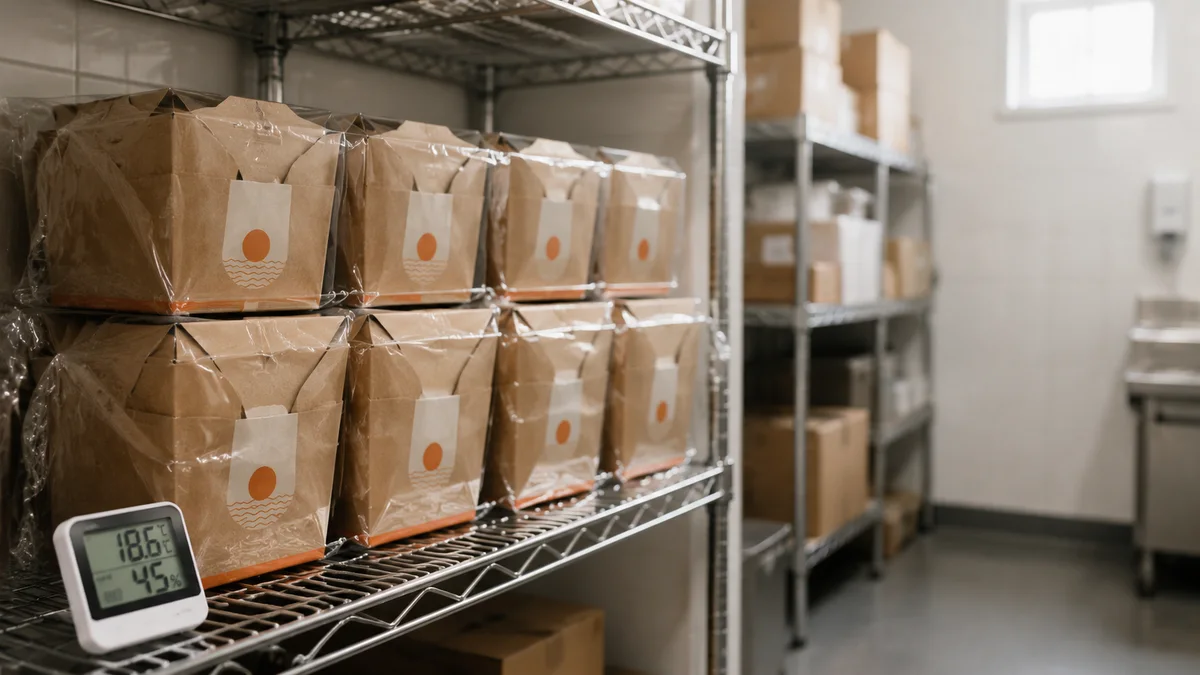
- Mantenga los envases en su funda de plástico interior original hasta el momento de uso — los recipientes expuestos acumulan polvo, aerosol de grasa y contaminantes transportados por el aire de entornos de cocina concurridos.
- Capacite a cada miembro del personal que manipule envases sobre un protocolo de higiene por escrito y registre las fechas de formación — los inspectores EHO pedirán ver los registros.
- Implemente un sistema de primero en entrar, primero en salir (FIFO) con marcado de fecha claro en las cajas exteriores — los envases se degradan con el tiempo, especialmente los materiales compostables y a base de papel.
Por qué el almacenamiento de envases se pasa por alto — y por qué los EHO lo notan
Entre en la mayoría de los takeaway independientes del Reino Unido y encontrará una escena familiar. Una bandeja de 500 cajas de hamburguesas encajada entre el cubo de la fregona y la puerta trasera. Soportes de vasos de papel apilados encima del microondas. Una funda entreabierta de cuencos para ensaladas sobre la encimera de preparación acumulando condensación del baño maría a tres pies de distancia.
Esto no es pereza. Es lo que ocurre cuando el espacio es escaso, los márgenes son estrechos y nadie ha explicado nunca que el almacenamiento de envases es un problema de seguridad alimentaria. La diferencia es que los EHO ahora están entrenados para buscar estos escenarios exactos. Una encuesta de 2025 de NSF encontró que el 40% de los gerentes de restaurantes del Reino Unido citaron el espacio y el almacenamiento adecuado como un riesgo principal de seguridad alimentaria en su operación. El almacenamiento de envases es parte de ese cálculo.
El marco legal se encuentra bajo la Ley de Seguridad Alimentaria de 1990 y el Reglamento de Higiene de los Alimentos (Inglaterra) de 2013. Estos requieren que los materiales en contacto con alimentos — que incluyen recipientes desechables para llevar, vasos, tapas, cubiertos y servilletas — se almacenen en condiciones que eviten la contaminación. El Reglamento (CE) 1935/2004, retenido en la ley del Reino Unido después del Brexit, requiere específicamente que los materiales destinados a entrar en contacto con alimentos no se almacenen de una manera que pueda transferir sustancias nocivas a los alimentos que luego tocan.
Un EHO que camina por sus instalaciones verificará tres cosas sobre sus envases: dónde se almacenan, cómo se protegen y si su personal entiende el procedimiento de manipulación. Falle en cualquiera de esos y aparecerá en el informe de inspección — no necesariamente como una infracción independiente, sino como un factor contribuyente a una calificación de higiene más baja.
Configuración de un área de almacenamiento de envases dedicada
Lo más efectivo que puede hacer es sacar los envases de la cocina por completo. Una habitación separada, un armario ventilado o una estantería construida especialmente lejos de las superficies de preparación de alimentos — cualquiera de estos satisfará el requisito central de EHO de que los envases no compartan espacio con ingredientes crudos, productos químicos de limpieza o residuos.
Si no puede prescindir de una habitación separada, cree una zona de envases designada dentro de su espacio de almacenamiento existente. Los requisitos mínimos son:
Distancia del suelo de al menos 45 cm. Los envases almacenados directamente en el suelo absorben humedad, atraen plagas y acumulan polvo y residuos del tráfico peatonal. También es lo primero que ve un inspector al entrar en su almacén. Utilice estanterías resistentes clasificadas para el peso de las cajas apiladas — un palé estándar de 1000 cajas para llevar pesa aproximadamente 18 a 22 kg.
Separación de los productos químicos de limpieza de al menos 1 metro. Los envases desechables son porosos. Las cajas de cartón para llevar, los vasos de papel y los recipientes de alimentos de kraft absorberán vapores químicos de la lejía, desengrasante y limpiador de suelos almacenados cerca. Esos vapores pueden transferirse a los alimentos. Mantenga los productos de limpieza en un armario separado, idealmente con llave, y nunca en estanterías directamente encima o debajo de las existencias de envases.
Protección contra la contaminación por encima. No almacene envases debajo de tuberías, unidades de aire acondicionado o conductos de ventilación. Gotea condensación, cae polvo y se acumula grasa. Si las tuberías superiores son inevitables, instale una bandeja de goteo o use una lámina de plástico como barrera temporal — pero señale esto como un riesgo en su documentación HACCP.
El almacenamiento cerrado es preferible a las estanterías abiertas. Un armario simple con puertas mantiene fuera la grasa, el polvo y los insectos transportados por el aire. Si usa estanterías abiertas, mantenga los envases en sus cajas exteriores selladas o cubra las cajas abiertas con una lámina de plástico limpia entre turnos.
Marcus dirige una cocina de hamburguesas a domicilio en Birmingham que opera desde una unidad de 250 pies cuadrados. Todo su almacén es un hueco de 2 metros por 1,5 metros. Al instalar tres niveles de estanterías montadas en la pared y un armario bajo encimera con llave, separó los envases de los ingredientes por completo. Coste total: £140 en estanterías y una tarde de instalación. Su puntuación EHO mejoró de 3 a 5 en la siguiente inspección, y el inspector señaló específicamente la disposición de almacenamiento de envases como un ejemplo de buena práctica.
Temperatura, humedad y el entorno de almacenamiento
Los envases desechables se comportan más como los alimentos de lo que podría esperar. Los cambios de temperatura y la humedad hacen que los recipientes a base de papel se deformen, las tapas de plástico se vuelvan quebradizas y los materiales compostables comiencen a degradarse antes de tocar los alimentos.
El rango de almacenamiento ideal para envases desechables de alimentos es de 15 °C a 25 °C, con una humedad relativa entre el 40% y el 60%. Por debajo de 15 °C, ciertos vasos revestidos de PLA y recipientes compostables pueden volverse quebradizos, y los sellos adhesivos en las bolsas de papel pueden perder adherencia. Por encima de 25 °C, los recubrimientos de polietileno en los vasos de papel estándar pueden ablandarse, y los recipientes apilados pueden pegarse — un problema que se hace evidente cuando un trabajador de la cafetería intenta separar dos vasos durante un apuro matutino y rasga el borde.
La humedad es la mayor amenaza en los locales del Reino Unido. El clima británico significa que la humedad ambiental supera regularmente el 70%, particularmente en almacenes subterráneos y ubicaciones costeras. Los envases a base de papel expuestos a una humedad superior al 65% durante períodos prolongados absorberán la humedad del aire. Los resultados: cajas para llevar onduladas y deformadas que no cierran correctamente, costuras de vasos de papel que se debilitan y gotean, y bolsas de kraft que se rompen por el asa con la mitad de su peso nominal.
Vigile los ciclos de condensación. Si la temperatura de su almacén baja durante la noche y vuelve a subir cuando la cocina se enciende por la mañana, la humedad se condensa en las superficies frías de los envases, igual que en las ventanas frías. Este ciclo diario de humedad y sequedad acelera la degradación del material y crea condiciones donde las esporas de moho pueden germinar en las fibras de papel. Los envases compostables hechos de bagazo, PLA o papel kraft son particularmente vulnerables — estos materiales están diseñados para descomponerse en condiciones de compostaje, y un almacén cálido y húmedo les da una ventaja.
Tres pasos prácticos para controlar su entorno de almacenamiento:
Instale un termohigrómetro digital básico en su área de almacenamiento de envases. Los modelos cuestan menos de £15 y le dan una lectura continua. Verifíquelo semanalmente y registre las lecturas — esta documentación impresiona a los inspectores EHO porque muestra una gestión activa.
Si la humedad supera constantemente el 60%, añada un deshumidificador portátil. Una unidad compacta de 500 ml por día cuesta alrededor de £40 y es adecuada para un almacén pequeño. Vacíelo a diario y colóquelo lejos de las existencias de envases para evitar puntos secos localizados.
Mantenga los envases alejados de fuentes de calor — radiadores, calentadores de agua, paredes traseras de hornos de pizza y luz solar directa a través de ventanas crean microclimas que degradan las existencias. Una distancia mínima de 1 metro de las fuentes de calor es una regla sensata.
Procedimientos de manipulación que previenen la contaminación
La forma en que su personal manipula los envases importa tanto como dónde se almacenan. Un miembro del equipo que acaba de manipular pollo crudo, se ha secado las manos en un paño y luego ha metido la mano en una funda abierta de cajas para llevar acaba de crear una vía de contaminación que elude todos los procedimientos de seguridad alimentaria en su cocina.
La guía de la Agencia de Normas Alimentarias sobre materiales en contacto con alimentos es clara: los envases deben estar protegidos de la contaminación en cada etapa, desde la entrega hasta la entrega al cliente. Esto significa protocolos de manipulación tan específicos y aplicados como sus reglas de manipulación de alimentos.
Las manos deben lavarse antes de tocar cualquier envase en contacto con alimentos. Esto suena obvio, pero en un servicio concurrido, es la regla que se salta primero. Un cocinero que emplaca pedidos se moverá entre manipular alimentos y coger recipientes docenas de veces por hora. La solución no es lavarse las manos entre cada recipiente — eso es poco práctico — sino crear un sistema donde los envases sean accesibles solo por personal designado con las manos limpias, o donde los recipientes se preparen de antemano en una configuración de dispensación protegida.
Use pinzas o guantes desechables al recuperar recipientes individuales del almacenamiento a granel durante el servicio. Muchos operadores mantienen una pila de cajas para llevar en el paso durante los períodos concurridos para mayor velocidad. Esa pila debe ser pequeña — suficiente para 30 minutos de servicio — y cubierta con un paño limpio o una tapa entre usos. Las existencias a granel se mantienen protegidas en el almacenamiento; solo lo necesario entra en la cocina.
Nunca almacene envases abiertos en el suelo, sobre tapas de cubos de basura o debajo del paso. Estos lugares acumulan residuos, salpicaduras de fregar y tráfico de plagas. Cada funda abierta de recipientes necesita una superficie limpia designada — una estantería, una bandeja o un recipiente de plástico sellado — que se limpie al inicio y al final de cada turno.
Inspeccione los envases antes de usarlos. Una comprobación visual rápida lleva dos segundos: ¿está el recipiente limpio, seco y sin daños? ¿Hay signos de actividad de plagas, manchas de moho u olor químico? Incorpore esta comprobación en sus procedimientos de apertura y cierre para que se convierta en un hábito en lugar de una ocurrencia tardía.
Mantenga intacta la funda de plástico interior original. La mayoría de los envases al por mayor llegan en una caja exterior de cartón ondulado con una funda interior de polietileno que protege el producto. Deje los recipientes en esa funda interior hasta que los necesite. La funda es de grado alimenticio diseñada específicamente para proteger las superficies en contacto con alimentos. Cortarla y dejar los recipientes expuestos durante días o semanas anula su propósito.
Rotación de existencias, registros de inventario y vida útil
Los envases tienen una vida útil, incluso si no hay una fecha de caducidad impresa en la caja. Los recipientes a base de papel se degradan durante 12 a 18 meses en buenas condiciones de almacenamiento. Los materiales compostables tienen un período más corto — típicamente 9 a 12 meses antes de que el material comience a perder integridad estructural. Los recipientes de plástico duran más pero pueden volverse quebradizos si se exponen a la luz UV o a ciclos de temperatura.
Un sistema de primero en entrar, primero en salir (FIFO) evita que las existencias viejas permanezcan en la parte trasera de la estantería hasta que sean inutilizables. El método es sencillo:
Marque cada caja entrante con la fecha de entrega usando un rotulador permanente. Escríbalo grande en el lado que mira hacia afuera en la estantería.
Apile las nuevas entregas detrás de las existencias existentes. Al reabastecer, mueva las cajas más viejas al frente y coloque las nuevas llegadas atrás.
Establezca una tenencia máxima de existencias de 6 a 8 semanas de uso. Mantener más de dos meses de existencias de envases aumenta el riesgo de daños, degradación y problemas de plagas. También inmoviliza efectivo y espacio de almacenamiento.
Verifique el estado de las existencias durante su revisión semanal de pedidos. Abra un recipiente de la caja más vieja e inspecciónelo. ¿Se ve, siente y huele limpio? Si los recipientes de papel muestran amarilleamiento, ondulaciones u olor a humedad, deséchelos. El coste de reemplazar una caja es mucho menor que el coste de una queja de cliente o una inspección fallida.
Mantenga un registro de inventario simple. Un cuaderno u hoja de cálculo que rastree fechas de entrega, cantidades y números de lote lleva minutos por semana y le da evidencia documentada de buenas prácticas para su inspección EHO. También ayuda con la precisión de los pedidos — sabrá exactamente lo que tiene y cuándo necesita reordenar.
Formación del personal y protocolos escritos
Un inspector EHO hará preguntas a su personal. Si la persona que manipula los envases no puede explicar el procedimiento de higiene, no importa lo buena que sea su configuración de almacenamiento — el inspector concluirá que sus sistemas existen solo en papel.
Los protocolos escritos convierten las buenas intenciones en estándares ejecutables. Cree una página de procedimiento de manipulación de envases que cubra:
Dónde se almacenan los envases y por qué. Cómo recuperar los envases del almacenamiento (manos limpias, verificar estado). Dónde se pueden y no se pueden colocar los envases abiertos durante el servicio. Cómo manipular los envases después de tocar alimentos crudos, productos químicos de limpieza o residuos. Qué hacer si se encuentra un envase dañado, mojado o contaminado.
Publique este protocolo en el área de almacenamiento de envases y sobre el paso. Use fotos de su configuración real, no imágenes prediseñadas genéricas. Una foto de su estantería con una marca verde y una foto del suelo con una cruz roja es más efectiva que párrafos de texto.
Capacite a cada nuevo empleado sobre el manejo de envases durante su inducción. Realice un repaso de 15 minutos para todo el personal cada seis meses. Registre las fechas de formación y quién asistió — esta documentación es oro durante una inspección EHO porque demuestra una cultura activa de seguridad alimentaria en lugar de una política única que nadie recuerda.
El Instituto Colegiado de Salud Ambiental recomienda que las empresas alimentarias reevalúen sus procedimientos de gestión de seguridad alimentaria al menos anualmente. Incluya el almacenamiento y manejo de envases en esa revisión anual. Si ha cambiado de proveedor, se ha mudado de local o ha aumentado volúmenes, su configuración de almacenamiento puede necesitar adaptarse.
Fallos comunes de almacenamiento de envases EHO y cómo solucionarlos
Basado en informes de inspección, datos de aplicación y guías publicadas de UKHospitality, aquí están los fallos de almacenamiento de envases que los EHO señalan con más frecuencia — y exactamente qué hacer con cada uno.
Envases almacenados directamente en el suelo. Este es, con diferencia, el hallazgo más común. La solución es instantánea: instale estanterías, mueva las existencias a palés o use cajas de plástico apilables como medida provisional. Incluso un conjunto de estanterías de garaje de £25 de una ferretería resuelve el problema.
Envases almacenados junto a productos químicos de limpieza. Mueva los productos químicos a un armario separado con llave. Si las limitaciones de espacio dificultan la separación completa, use cubos de almacenamiento de plástico sellados como barrera física y etiquételos claramente — "Solo envases de alimentos" y "Productos de limpieza — mantener separados".
Envases abiertos dejados expuestos en áreas de preparación de alimentos. Implemente la regla de 30 minutos: saque solo suficientes envases para las necesidades inmediatas del servicio y mantenga las existencias a granel protegidas. Cubra las áreas de preparación con tapas o paños limpios.
Sin procedimiento de manipulación escrito ni registros de formación. Redacte el protocolo de una página descrito anteriormente. Cree un registro de formación simple en un cuaderno u hoja de cálculo. Haga ambos antes de su próxima inspección.
Envases dañados o sucios aún en circulación. Agregue una comprobación del estado de los envases a su procedimiento diario de apertura. Capacite al personal para poner en cuarentena — no ignorar — cualquier envase que parezca mojado, sucio o dañado por plagas. Reserve un "estante de cuarentena" designado para existencias sospechosas para que no puedan entrar accidentalmente al servicio.
Actividad de plagas en áreas de almacenamiento. Los roedores e insectos son atraídos por las fibras de cartón y papel. Revise las áreas de almacenamiento semanalmente en busca de excrementos, marcas de roeduras y cubiertas de insectos. Selle los espacios alrededor de tuberías y puertas. Si encuentra evidencia, actúe de inmediato — un solo avistamiento de un ratón cerca de sus existencias de envases puede desencadenar una inspección formal y una rebaja en la calificación de higiene.
Preguntas frecuentes
¿Necesito una habitación separada para el almacenamiento de envases?
No, una habitación separada es ideal pero no obligatoria. Un armario dedicado, una estantería o una zona claramente definida lejos de las superficies de preparación de alimentos cumple con el requisito mínimo. La clave es la separación — el área de envases debe ser distinta de las áreas donde se manipulan alimentos crudos, productos químicos o residuos. Si usa estanterías abiertas en un almacén compartido, mantenga los envases en cajas exteriores selladas o cubiertos con una lámina de plástico limpia.
¿Puedo almacenar envases en un sótano o bodega?
Sí, siempre que controle la humedad. Los sótanos en edificios del Reino Unido suelen superar el 70% de humedad relativa, lo que dañará los envases a base de papel en semanas. Instale un deshumidificador, controle la humedad con un medidor digital y verifique el estado de las existencias semanalmente. Si el sótano tiene antecedentes de inundaciones o humedad persistente, busque una ubicación alternativa — ninguna cantidad de deshumidificación mantendrá los envases seguros en un entorno regularmente húmedo.
¿Cuánto tiempo puedo mantener los envases desechables en almacenamiento?
Los envases a base de papel y compostables deben usarse dentro de los 12 meses posteriores a la entrega. Los recipientes de plástico pueden durar de 18 a 24 meses si se almacenan correctamente, pero verifique si hay fragilidad o decoloración antes de usar. Aplique siempre rotación FIFO y marque las fechas de entrega en las cajas. Si no recuerda cuándo compró una caja particular de recipientes, ha estado allí demasiado tiempo.
¿El EHO verifica específicamente el almacenamiento de envases?
Sí. Aunque el almacenamiento de envases no es un elemento puntuado independiente en el Sistema de Calificación de Higiene Alimentaria, cae dentro de las categorías "confianza en la gestión" e "instalaciones y estructura". Un inspector que encuentre envases almacenados en el suelo, expuestos a contaminación o manipulados sin controles de higiene lo señalará como evidencia de mala gestión de la seguridad alimentaria, lo que contribuye a una calificación general más baja.
¿Qué debo hacer si encuentro envases dañados durante el servicio?
Ponga en cuarentena las existencias afectadas de inmediato. Muévalas a un área designada lejos tanto de los alimentos como de los envases limpios. Registre lo que encontró y cuándo. Si el daño afecta a más de unas pocas unidades, verifique todo el lote — una caja de hamburguesa con moho generalmente significa que toda la caja ha estado expuesta a la humedad. Contacte a su proveedor si el daño parece ser un problema de fabricación o transporte en lugar de un fallo de almacenamiento.
¿Los recipientes compostables necesitan condiciones de almacenamiento diferentes?
Sí. Los envases compostables hechos de PLA, bagazo u otros materiales de origen vegetal son más sensibles al calor y la humedad que el plástico convencional o el papel estándar. Almacene los recipientes compostables por debajo de 25 °C y por debajo del 55% de humedad relativa. Verifique el estado de las existencias mensualmente en lugar de trimestralmente — estos materiales pueden comenzar a degradarse dentro de 6 a 9 meses en condiciones subóptimas. Nunca almacene envases compostables donde estén expuestos a la luz solar directa, ya que los rayos UV aceleran la descomposición de los polímeros de origen vegetal.
Conclusión
Almacenar correctamente los envases desechables para llevar es una de las formas más baratas y rápidas de fortalecer su posición de seguridad alimentaria antes de una inspección EHO. Cuesta un conjunto de estanterías, un medidor de humedad y una tarde de organización — y elimina uno de los hallazgos negativos más comunes en las inspecciones de takeaway y cafeterías del Reino Unido.
Empiece por el suelo. Si sus envases están actualmente en el suelo, levántelos. Instale estanterías, marque las fechas de entrega en las cajas y separe los envases de los productos químicos, alimentos crudos y residuos. Redacte un procedimiento de manipulación de una página y informe a su equipo sobre ello esta semana. Estas tres acciones cubren la mayoría de lo que un inspector EHO buscará.
El estándar al que debe aspirar es simple: trate los envases desechables con suficiente cuidado como para sentirse cómodo comiendo alimentos que han estado en contacto con ellos. Porque eso es exactamente lo que hacen sus clientes, cada vez que abren una de sus cajas.
Si está revisando su configuración de envases y necesita recipientes que lleguen en condiciones limpias y bien protegidas, explore nuestra gama de cajas para llevar — todas suministradas con fundas interiores de grado alimenticio y documentación de trazabilidad completa. Para pedidos al por mayor o ayuda para hacer coincidir los tamaños de los recipientes con su menú, solicite un presupuesto a nuestro equipo.